Engine Misfires: Causes, Symptoms, Diagnosis, and Repair
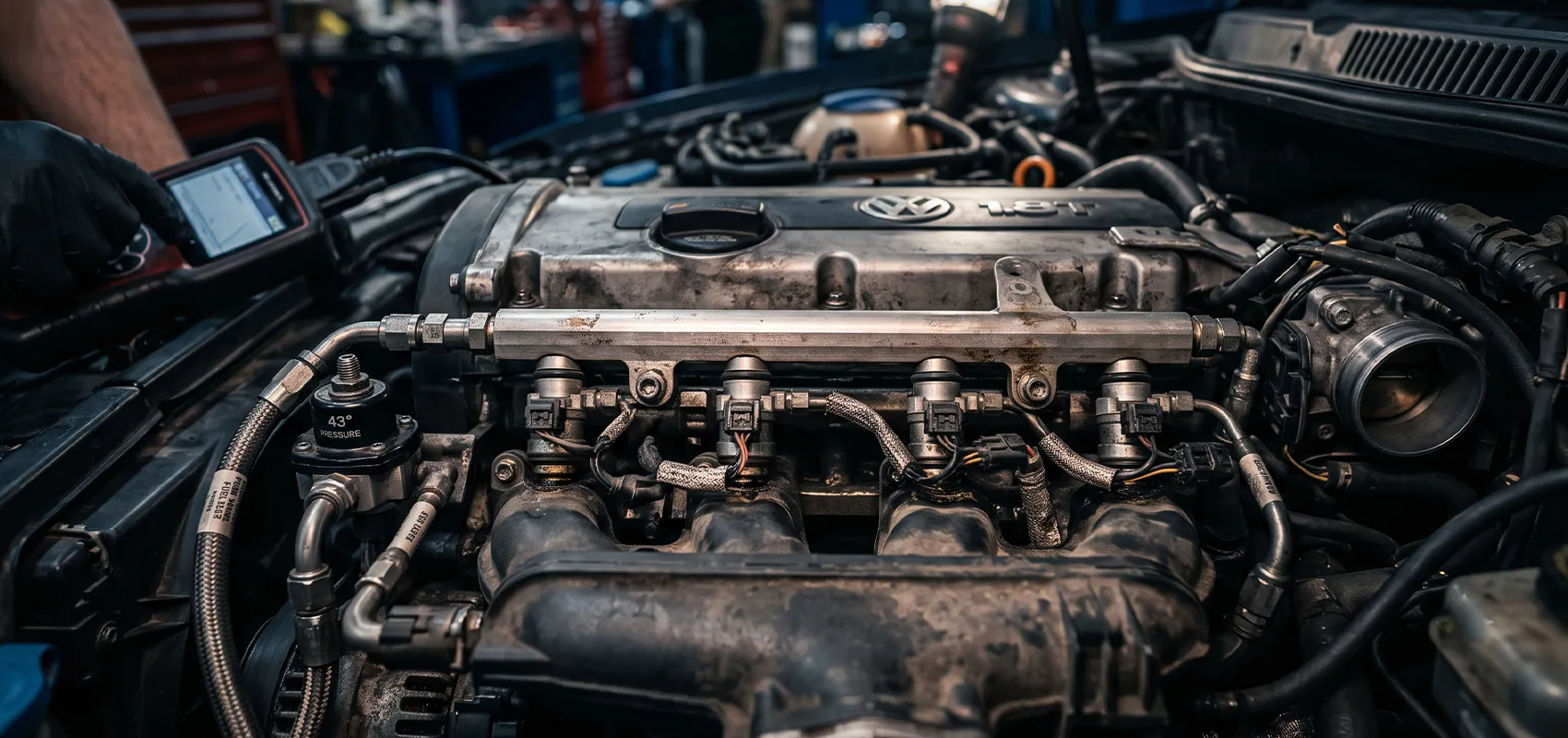
In this guide, you will learn about the most common causes of engine misfires, how to diagnose them, and the potential damage they can cause if ignored.
An engine misfire occurs when cylinders do not ignite the air-fuel mixture properly. This disrupts the engine's balance, reduces power output, and can result in serious damage if the issue is not diagnosed and resolved quickly.
Misfires can be caused by problems with the ignition system, fuel delivery, air intake, or internal engine components.
What is an engine misfire?
An engine misfire occurs when combustion within a cylinder is incomplete or fails to happen altogether. Instead of generating power, the affected cylinder contributes little to nothing, resulting in unstable engine operation.
Signs of an engine misfire
Common signs of a misfire include:
- Rough idling
- Engine stuttering or jerking
- Loss of power
- Poor fuel economy
- Engine vibration
- Flashing or steady Check Engine light
What causes engine misfires?
An engine misfire occurs when one or more cylinders fail to burn the air-fuel mixture properly, reducing power and often causing rough running. While the exact fault can vary by vehicle, most misfires stem from one of four categories:
Ignition system issues
- Worn spark plugs
- Faulty ignition coils
- Damaged spark plug wires
- Fuel system issues
Clogged or leaking fuel injectors
- Low fuel pressure
- Contaminated fuel system
- Air intake issues
Vacuum leaks
- Dirty mass airflow (MAF) sensor
- Intake manifold leaks
- Mechanical engine issues
Low compression
- Burnt valves
- Worn piston rings
- Worn head gasket
Each category corresponds to a specific engine system, helping narrow the list of possible causes during diagnosis.
How to diagnose engine misfires
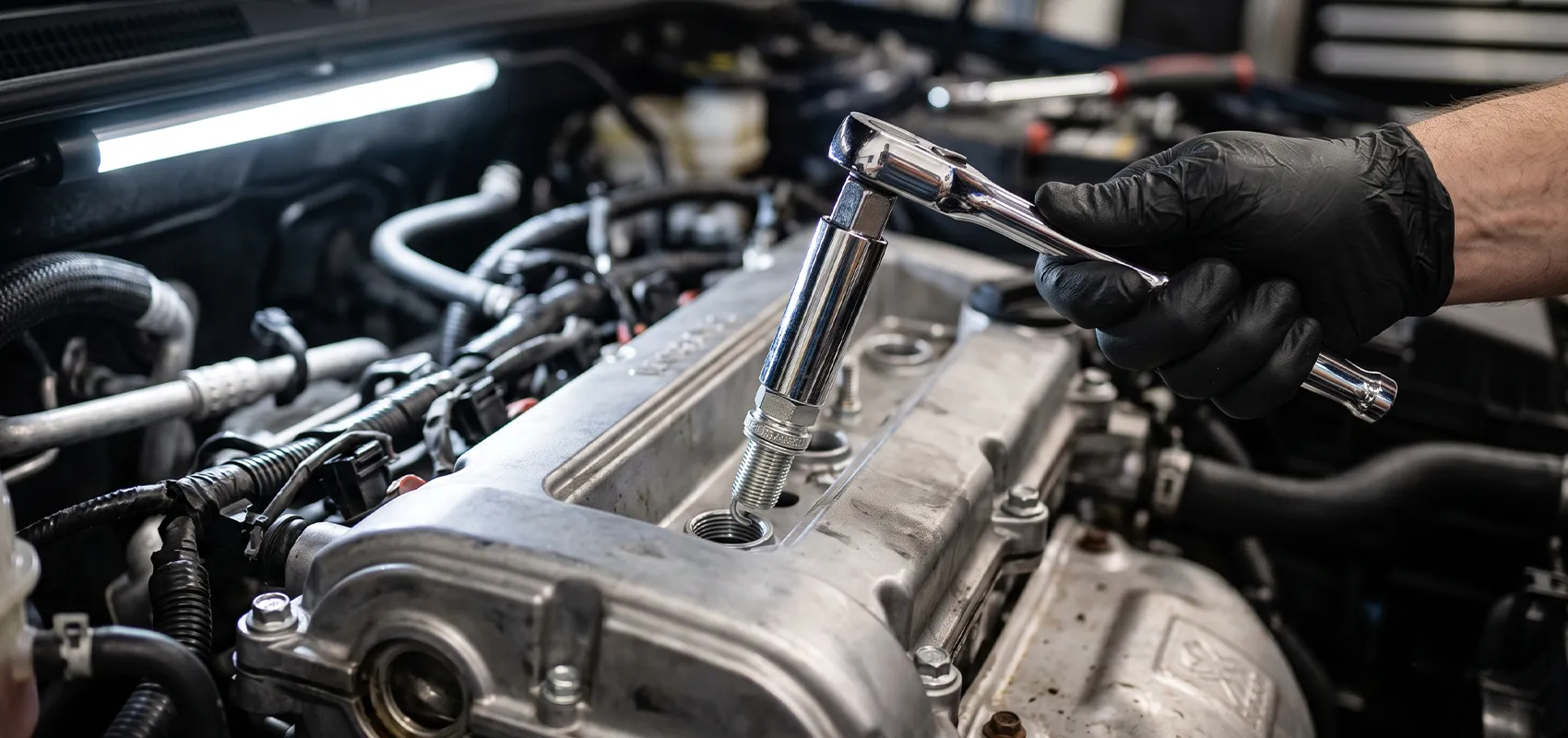
DIY diagnosing engine misfires involves several steps. Here is how to do it:
Step 1: Listen to the engine.
The first sign is often rough or jerky engine operation at idle, which can indicate a misfire. Listen for any vibrations or unusual sounds, as these may signal a malfunction.
Step 2: Use an OBD-II scanner.
If the check engine light comes on, mechanics use an OBD2 scanner to read error codes that help identify the cause of the misfire. Common misfire codes include P0300 (random/multiple cylinder misfire), P0301 (cylinder 1 misfire), and P0302 (cylinder 2 misfire); these provide valuable information about where the problem might be located.
Step 3: Inspect the spark plugs and ignition coils.
If misfires are occurring in only one cylinder, start by inspecting the spark plugs and ignition coil for damage. You may need to replace these parts if they appear worn or damaged.
Step 4: Check for vacuum leaks.
Use a vacuum gauge, a smoke machine to check for leaks in the intake manifold, hoses, or other vacuum system components.
Step 5: Perform a compression test.
If other diagnostic methods fail to identify the cause, a compression test can help determine if there are issues with internal engine components, such as pistons or valves.
Can you drive a car with an engine misfire?
Only if the misfire is minor and the car still accelerates smoothly enough to get you off the road or to a nearby repair shop. Typical examples are a slightly rough idle or a single-cylinder misfire that does not cause major power loss. Even then, drive gently, avoid hard acceleration, keep speed low, and do not tow or climb hills. Remember, driving with an engine fault can lead to serious damage. It's recommended by our technicians that you refrain from using the car and instead reach out to the mobile service provider or arrange for transport to the local service depot.
When a cylinder misfires, unburned fuel can flow into the exhaust system, potentially overheating and damaging the catalytic converter.
Even a short drive can result in cylinder wall wear and damaged pistons or valves.
Misfires should always be diagnosed and repaired as soon as possible to prevent further damage.
Typical engine misfire scenarios
- Cold-start misfires. This is often caused by fuel delivery issues, sensor malfunctions, or poor combustion during warm-up.
- Random misfire. This is usually more difficult to diagnose, and the problem may involve multiple systems, such as the ignition system, fuel system, or air intake system.
- Single-cylinder misfire. Typically, the issue is related to the ignition system or fuel injectors.
Preventing engine misfires
- Replace spark plugs at recommended intervals.
- Use high-quality fuel.
- Maintain proper fuel pressure.
- Address vacuum leaks early.
- Keep sensors clean and in good working order.
What is the most common cause of engine misfires?
The most common causes of engine misfires are worn, fouled, or faulty spark plugs and faulty ignition coils. It’s the first thing a technician checks because the spark plug is the part that actually ignites the air-fuel mix in the cylinder.
Can an engine misfire go away on its own?
No. In some cases, the engine computer may stop showing the symptom after conditions change, but the underlying fault is still there, and those usually need diagnosis rather than waiting for them to heal.
Will a misfire damage my engine?
Yes. Continuing to drive with an engine misfire can lead to more serious and costly damage. Unburned fuel may enter the exhaust system and overheat or destroy the catalytic converter, while persistent misfires can also place added strain on internal engine components. Have the vehicle inspected as soon as possible, especially if the check engine light is flashing.
Read also:
An engine misfire is a clear sign of a malfunction and should never be ignored.
Visit the Indy Auto Man service station to identify issues early, prevent costly repairs, and ensure your engine runs smoothly and your car drives safely on the road