Used Car Values From J.D. Power (ex. NADA)
Table of Contents
- What is the former NADA used car guide?
- Is J.D. Power the same as KBB?
- What is the National Automobile Dealers Association?
- Where does J.D. Power get its data?
- How does J.D. Power list vehicle prices?
- Are J.D. Power used car values accurate?
- What are the limitations of former NADA values?
- How to find a more realistic used car value in Indiana

Many people in the United States recognize the former NADA Used Car Guide as a trusted source of vehicle-pricing information. However, after the acquisition, the guide became part of J.D. Power’s valuation business and is now offered through J.D. Power Valuation Services and J.D. Power Values, while the products and digital tools have been updated.
At Indiana car dealer Indy Auto Man, we buy and sell used vehicles every day. We understand the importance of obtaining a precise, transparent appraisal of the car. So, are former NADA - or current J.D. Power - used car values accurate and reliable? The answer depends on the type of value you are viewing, the vehicle’s condition, its equipment and mileage, and the local market volatility.
What is the former NADA used car guide?
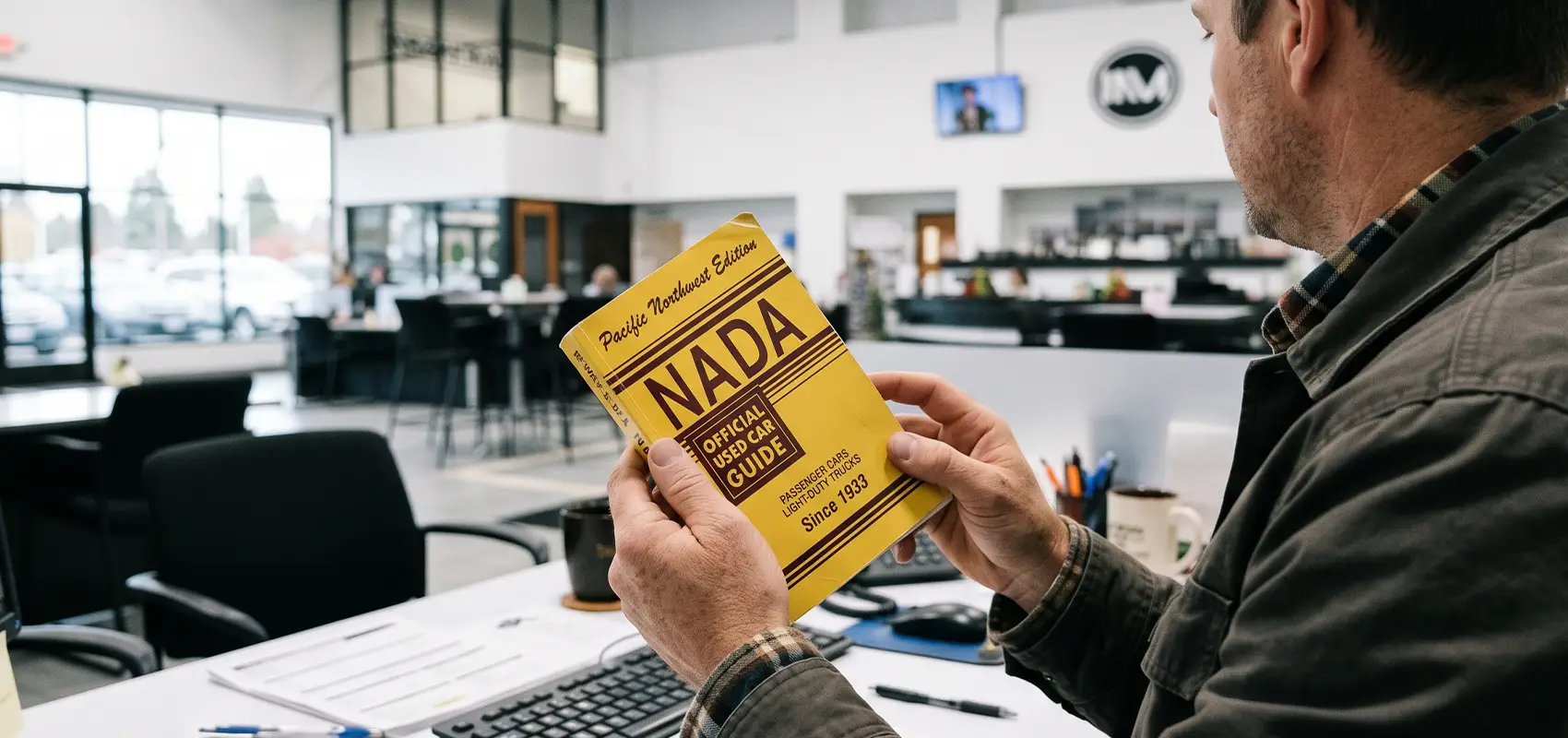
The NADA Used Car Guide was a professional vehicle-valuation resource associated with the National Automobile Dealers Association. J.D. Power acquired the NADA Used Car Guide business in 2015 and subsequently transitioned the products to the J.D. Power brand. Today, the relevant products are commonly presented as the J.D. Power Official Used Car Guide, J.D. Power Values, or J.D. Power Valuation Services.
The current J.D. Power Official Used Car Guide provides values for several transaction types, including:
- Trade-in values
- Wholesale and auction values
- Retail values
- Loan values
- Certified pre-owned values where available
The guide is designed primarily for automotive professionals, including dealers, lenders, insurers, and other wholesale businesses. J.D. Power also provides consumer-facing pricing and valuation tools through JDPower.com.
Is J.D. Power the same as KBB?
No. J.D. Power and Kelley Blue Book are separate valuation providers with different data sources, methodologies, and estimate types. Both can help consumers research a vehicle, but their figures may differ because each company defines and calculates values differently.
Read our KBB vs. NADA comparison to learn more about how J.D. Power’s former NADA-based valuations compared with Kelley Blue Book estimates.
It is also important to compare equivalent values. Retail value is not the same as trade-in value, and neither is necessarily the same as what a private buyer will pay. Before comparing two estimates, check if they take the same figures as the baseline:
- Vehicle year, make, model, and trim
- Mileage
- Optional equipment
- Condition category
- Transaction type
- Geographic market
| Comparison Factor | Kelley Blue Book | J.D. Power |
|---|---|---|
| Vehicle identification | Year, make, model, trim or style and, where available, the correct body configuration. | Year, make, model, trim and equipment. Learn more |
| Optional equipment | Allows users to add options and packages such as a moonroof, alloy wheels, and premium audio. Learn more | Accounts for vehicle equipment and factory-installed options. |
| Condition | Lets users select a condition category, commonly Excellent, Very Good, Good, or Fair. | Values may depend on the vehicle’s condition and appraisal assumptions. |
| Market and location | Adjusts values for ZIP code, local market conditions, and regional demand. | J.D. Power products may provide market-specific or ZIP-code-level data, depending on the product. |
| Data and updates | Uses actual transaction data, wholesale and retail information, seasonal trends, and market conditions. | Uses transaction and market data to support trade, retail, wholesale, auction, and loan valuations. |
| Typical use | Useful for consumers researching a private sale, trade-in, or expected purchase price. | Widely used by dealers, lenders, insurers, and other automotive businesses for appraisals. |
What is the National Automobile Dealers Association?
The National Automobile Dealers Association, or NADA, is a trade association representing franchised automobile dealers in the United States. The former NADA Used Car Guide was a valuation business associated with the organization. It is now part of J.D. Power’s valuation operations rather than a current NADA-branded valuation product.
For this reason, references to “NADA values” today usually mean historical NADA terminology or J.D. Power values that evolved from the former NADA Used Car Guide. Using the current name - J.D. Power Valuation Services or J.D. Power Values - helps avoid confusion when researching a vehicle.
Where does J.D. Power get its data?
J.D. Power uses vehicle transaction data, market information, vehicle specifications, mileage, equipment, and condition factors to produce different types of valuations. Its business valuation products include trade, wholesale, retail, and auction values, while consumer tools provide pricing information for buyers and sellers.
The valuation data incorporates millions of vehicle transactions and aggregate information from thousands of dealerships. Its trade-in methodology also considers factors such as the vehicle’s make, model, trim, mileage, and condition.
The current platform has also expanded beyond the traditional printed guidebook. Depending on the product, J.D. Power offers online tools, mobile products, APIs, and market-level data. Some tools provide values adjusted to a local market or ZIP code, which can be more useful than a broad national estimate.
How does J.D. Power list vehicle prices?

J.D. Power does not publish one universal “car value.” Instead, it presents different estimates for different transactions. For example, a vehicle may have one value when a dealer acquires it as a trade-in, another when it is sold at a wholesale auction, and a third when it is advertised to a retail customer.
The estimate may also change according to:
- Vehicle condition
- Mileage
- Trim level and factory options
- Regional demand
- Current supply and inventory
- Whether the vehicle is sold at wholesale, retail, or privately
- Whether the vehicle qualifies for certified pre-owned treatment
For a broader explanation of the different types of used car values, read about used car valuation categories here.
Are J.D. Power used car values accurate?
J.D. Power values can be a useful starting point, especially when you enter the vehicle details and valuation category correctly. However, no guide can perfectly predict the exact amount every buyer, dealer, or private seller will receive.
The most important limitation is that a guide estimate is not the same as a firm offer. A real offer also reflects an inspection, vehicle history, title status, reconditioning costs, local demand, current inventory, and the dealer’s expected selling expenses.
A retail estimate can be higher than a trade-in estimate because a dealer may need to:
- Inspect and recondition the vehicle.
- Repair mechanical or cosmetic issues.
- Complete required paperwork and compliance work.
- Finance inventory while the vehicle is being sold.
- Cover advertising, facility, and operating costs.
- Provide a warranty or other customer benefits.
Consequently, a value shown online should be treated as a benchmark rather than a promise.
What are the limitations of former NADA values?
At Indy Auto Man, we recommend using more than one source for your car evaluation before selling or trading in a car in Indiana. Here are several reasons why a guide estimate may differ from the offer you receive:
- The value type may not match your transaction. Retail value is not an expected dealer-buying price, and trade-in value is not the same as a private-party sales price.
- Vehicle condition varies significantly. Two cars with the same year, make, model, and mileage can have very different values because of accident history, maintenance, tires, interior wear, warning lights, or needed repairs.
- Equipment affects the estimate. Missing or incorrectly entered options, such as a specific engine, drivetrain, package, or safety feature, can change the result.
- Local markets differ. A model in high demand in Indianapolis may have a different value in another region. Current J.D. Power digital tools may provide more localized data than older printed guides.
- Market conditions change. Supply, interest rates, seasonality, and wholesale demand can move prices after a guide estimate is produced.
- Dealer costs affect actual offers. A dealer must account for inspection, reconditioning, transportation, marketing, and resale risk before making a purchase offer.
The former NADA guide should therefore not be described as “wrong” simply because its number differs from another source. Often, the disagreement comes from comparing different transaction types or different assumptions about the vehicle condition and features.
How to find a more realistic used car value in Indiana

The best way to estimate a used car’s market value in Indianapolis is to combine several sources:
- Identify the exact vehicle, including trim, drivetrain, options, and mileage.
- Be honest about condition and disclose accident, title, or mechanical damage.
- Compare J.D. Power values with other reputable pricing guides.
- Review similar vehicles currently listed in the Indiana market.
- Request actual offers from local dealerships for your car.
- Compare a cash sale, trade-in, and private-party sale value after considering time, repairs, and transaction risk.
You can compare our valuation with current market offers and learn what factors determine a used car’s value.
J.D. Power Valuation Services is the current successor to the former NADA Used Car Guide, but its figures remain estimates rather than guaranteed prices.
For the most realistic car price estimation, combine the guide value with the vehicle’s actual condition, Indiana market demand, and a firm offer from a local buyer, like the Indy Auto Man used car dealer.