Numbers on Oil: What They Mean and Which One to Choose
Table of Contents
- What do the numbers on oil mean? Oil viscosity ratings
- What does the W mean in oil? Winter rating - the first number on oil
- Operating temperature - the second number on oil
- What do markings like ACEA, API, and others mean?
- The differences in motor oils
- Which oil should you buy?
- Regular oil changes for your vehicle’s health
- How often should I change my oil?
- Is synthetic oil worth it?
- Can I switch between oil types?
- Schedule your oil change at Indy Auto Man
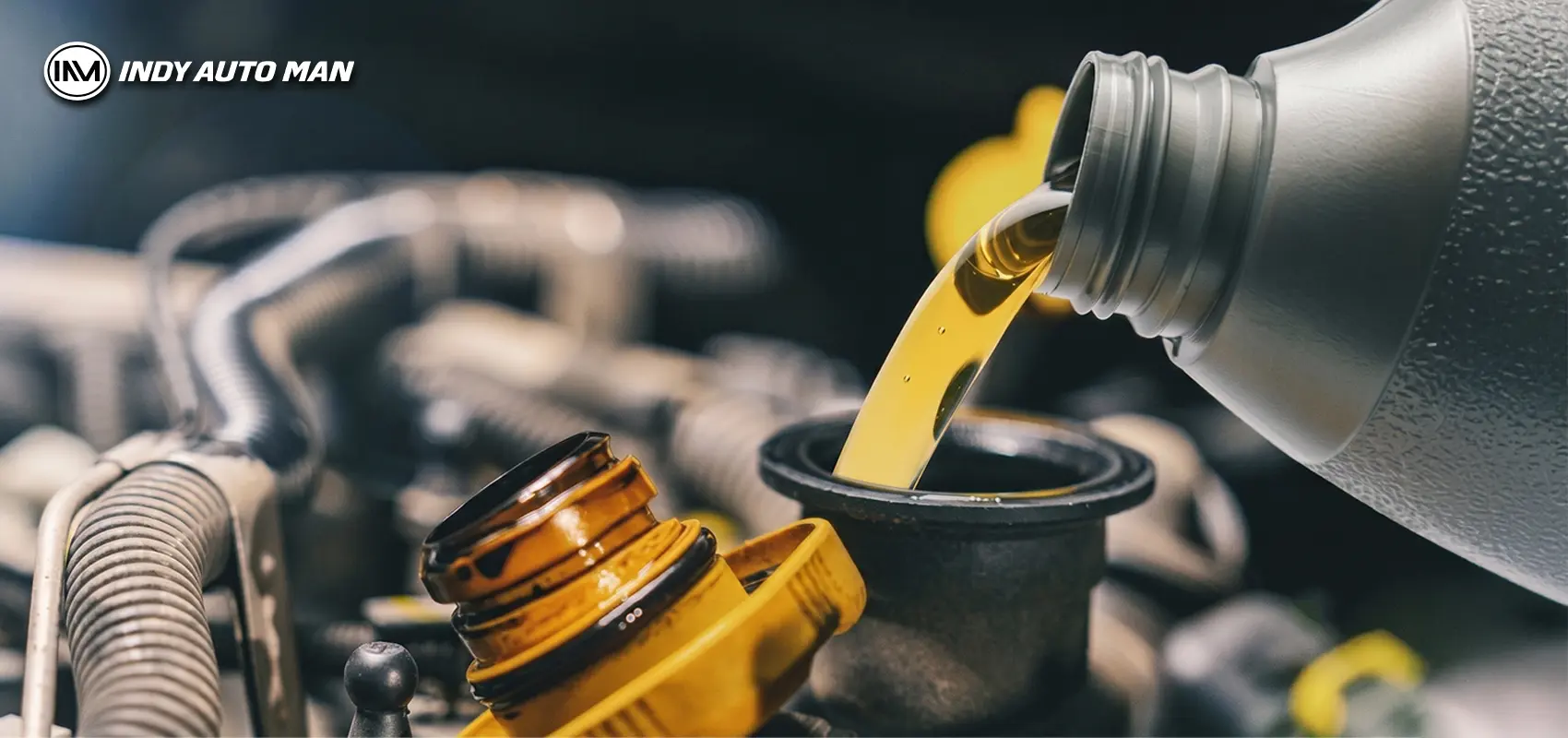
Even though motor oil is one of the simplest and most affordable maintenance items, it plays a critical role in your engine’s long-term performance, and it’s crucial to use the right one.
The numbers written on motor oil canisters indicate the oil's viscosity. Let's take a closer look at exactly what they signify.
What do the numbers on oil mean? Oil viscosity ratings
Motor oil acts as the lifeblood of your engine, protecting internal components against high heat and pressure while helping maintain efficiency and reliability. You’ve likely seen labels like 0W-20 or 5W-30 - but what do they actually mean?
What does the W mean in oil? Winter rating - the first number on oil
The number before the “W” indicates cold performance - how well the oil flows in low temperatures.
- Lower numbers (0W, 5W) flow better in cold weather
- Higher numbers (10W, 15W) are thicker when cold
Operating temperature - the second number on oil
The number after the “W” reflects how thick the oil remains at normal engine operating temperature (212°F).
- Higher numbers (40, 50) mean stronger protection against heat and heavy loads
- Lower numbers (20, 30) improve fuel efficiency and engine responsiveness
This number does not correspond to the outdoor temperature. It reflects how well the oil maintains its protective film under engine heat.
What do markings like ACEA, API, and others mean?
During the certification process, motor oils undergo testing to ensure compliance with the standards set by various industry organizations.
For instance, ACEA stands for the European Automobile Manufacturers' Association, while API represents the American Petroleum Institute. These organizations evaluate oils and assign them specific classifications based on their performance characteristics.
Modern motor oils almost invariably feature these markings; therefore, when selecting an oil, you can simply use them to verify its compatibility with your specific vehicle.
Another category of motor oil markings consists of manufacturer approvals. High-quality motor oils typically hold approvals from most major automakers, meaning the packaging will display a host of brand logos, each indicating a specific approval.
The differences in motor oils

From a very basic point of view, motor oil consists of a base oil and additives, improving the characteristics of the oil to the required ones.
Based on the composition, motor oils are divided into mineral (conventional) and synthetic. This classification has its weaknesses, but consumers and marketers are accustomed to it.
- Conventional oils are those where the base is made from petroleum.
- Synthetic ones are based on oil produced using organic synthesis.
- Semi-synthetic motor oils are mineral oils with the addition of synthetic components; that is, strictly speaking, they still belong to mineral oils.
Which oil should you buy?
There is no need to guess - always follow your manufacturer’s recommendations. Many vehicles allow for multiple viscosity options depending on the climate.
Using the correct oil helps prevent:
- Dry starts in cold weather (when oil flows too slowly)
- Excessive wear or overheating in hot conditions (when oil becomes too thin)
For many Indiana drivers, oils like 0W-20 or 5W-30 offer excellent year-round performance, but always confirm what your vehicle requires.
Oils for gasoline and diesel engines differ primarily in how they handle heat and combustion byproducts.
- In gasoline engines, oil temperatures near the top piston ring can reach about 320°F
- In diesel engines, temperatures can climb to nearly 600°F
This higher stress demands extra features, that's why diesel oils typically include different additive packages.
Regular oil changes for your vehicle’s health

Skipping oil changes or using the wrong oil can lead to:
- Increased engine wear
- Reduced fuel efficiency
- Engine overheating
- Expensive long-term damage
Staying on schedule is one of the easiest ways to extend the life of your vehicle, especially with Indiana’s seasonal temperature swings.
How often should I change my oil?
Most modern vehicles require oil changes every 5,000 to 7,500 miles, but always follow your manufacturer’s guidelines.
Is synthetic oil worth it?
Yes. Synthetic oil offers better performance in extreme temperatures, longer lifespan, and improved engine protection, especially useful in Indiana’s climate.
Can I switch between oil types?
In many cases, you can make a switch. First, you need to drain off the old oil completely, change the oil filter, and then add new oil to the system.
For the particular oil characteristics, it’s best to consult your owner’s manual or a professional technician before switching.
Schedule your oil change at Indy Auto Man
Keeping up with routine maintenance doesn’t have to be complicated. At Indy Auto Man, our service team helps Indiana drivers choose the right oil and keep their vehicles in peak condition.
Whether you need a quick oil change or a full maintenance check, we’ve got you covered.
Visit Indy Auto Man’s service center today or schedule your appointment online to keep your engine running like new.