Car Value Estimate: How to Find Your Vehicle’s Market Value in Indiana

If you are planning to sell or trade in your car, the first question is usually simple: How to estimate its value? The answer is more complicated than the price shown in Indiana’s online listings.
A realistic car value estimate should reflect your vehicle’s year, mileage, trim, equipment, history, condition, location, and current demand. Most importantly, the most accurate estimate comes from a buyer who is actually prepared to pay for your vehicle.
Let's look at how the real market price of a car is actually determined, and how to sell your vehicle most beneficially.
What determines a car’s real value?
A car value estimate is based on more than the badge on the hood. The following factors can significantly change what a dealer or private buyer will offer.
Year and mileage
Age and odometer reading remain basic valuation factors. However, mileage should be evaluated in context. A well-maintained vehicle with higher mileage may be more attractive than a lower-mileage car with neglected maintenance or an uncertain history.
For a meaningful comparison, look for vehicles with a similar model year, mileage range, and body style. A 2021 SUV with 45,000 miles should not be compared directly with a 2021 example showing 100,000 miles.
Trim level and equipment
The difference between trim levels can be substantial. Features that may affect value include:
- Four-wheel drive or all-wheel drive.
- Leather or upgraded upholstery.
- Heated and ventilated seats.
- Advanced driver-assistance systems.
- Navigation and premium audio.
- A towing package.
- Sunroof or panoramic roof.
- Hybrid or high-efficiency powertrain.
- Factory navigation, larger wheels, or technology packages.
When researching your vehicle, identify the exact trim and factory options. A generic value for the same make, model, and year may not accurately represent your car.
Vehicle history
A vehicle history report can reveal information that is difficult to identify from photographs or a short test drive. Dealers and buyers may review:
- Reported collisions.
- Salvage, rebuilt, or flood branding.
- Theft records.
- Number of previous owners.
- Service and inspection records.
- Odometer readings.
- Open recalls or title issues.
A minor accident does not automatically make a car a poor purchase. A vehicle with repaired cosmetic damage and complete documentation may be worth more than a supposedly “clean” vehicle with multiple owners, inconsistent mileage, or incomplete maintenance records.
Mechanical and cosmetic condition
Condition has a direct impact on the car’s value estimate - a buyer must account for the work required before safely driving the car, including inspection, repairs, detailing, tires, brakes, and other reconditioning.
Items that may reduce an offer include:
- Warning lights on the dashboard.
- Worn tires or brakes.
- Engine, transmission or suspension problems.
- Significant dents or paint damage.
- Cracked glass.
- Torn seats or damaged interior trim.
- Missing keys, manuals, or equipment.
- Poor maintenance records.
Cleaning the car and removing personal belongings can improve its presentation, but it cannot replace mechanical repairs or eliminate a negative vehicle history.
Why online listing prices can mislead you
A vehicle advertised on a marketplace is not necessarily a vehicle that has sold for that amount. It is simply the seller’s asking price.
Many private sellers list their cars above the amount they expect to accept because they anticipate negotiation. Others may price their vehicles according to emotional attachment, the amount they still owe on the loan, or the cost of recent repairs. That does not mean buyers in Indianapolis or elsewhere in Indiana are willing to pay the same amount.
Dealership listings can also vary. A dealer may price a vehicle according to its reconditioning costs, warranty coverage, financing options, overhead, and expected profit. Two similar vehicles may have different prices because one has better equipment, a cleaner history, or lower preparation costs.
That is why an average of online asking prices is not the same as a car’s real market value. The most useful figure is the amount a qualified buyer is ready to pay after reviewing the vehicle and its market potential.
How to estimate your car’s value

Researching the market can help you set expectations before contacting a buyer. Use this process to create a reasonable preliminary estimate.
1. Identify the exact vehicle
Record the vehicle’s:
- Model year.
- Make and model.
- Trim level.
- Body style.
- Engine and drivetrain.
- Mileage.
- ZIP code.
- Major factory options.
- Title and accident history.
The vehicle identification number, or VIN, can help identify the correct configuration and history.
2. Compare similar vehicles
Search listings in Indianapolis and nearby Indiana markets. Depending on the vehicle, it may also be helpful to compare cars in cities such as Carmel, Fishers, Greenwood, Noblesville, and other communities within a practical buying radius.
Use vehicles with similar:
- Model year.
- Mileage.
- Trim.
- Drivetrain.
- Condition.
- History.
- Equipment.
Avoid comparing a base-trim front-wheel-drive model with a fully equipped all-wheel-drive version simply because they share the same model name.
3. Remove unrealistic comparisons
Do not let one unusually low or high listing determine your estimate. An unusually cheap car may have major mechanical problems, title damage, or an urgent seller. An unusually expensive car may have rare equipment, unusually low mileage, or an asking price that does not reflect actual demand.
Look for the middle of the market rather than relying on the highest number you find.
4. Use online calculators carefully
Car selling platforms and online calculators can provide a useful starting range. They typically ask for basic details such as the vehicle’s year, make, model, mileage, and condition. Some tools also use the VIN or ZIP code to make the result more specific.
However, an online estimate is not a guaranteed purchase offer. A calculator cannot fully evaluate a noisy wheel bearing, worn transmission, poor paint repair, tire condition, or an interior that needs extensive work. It also may not know how strongly a specific model is selling in the Indianapolis market today.
Why a dealership estimate is more accurate
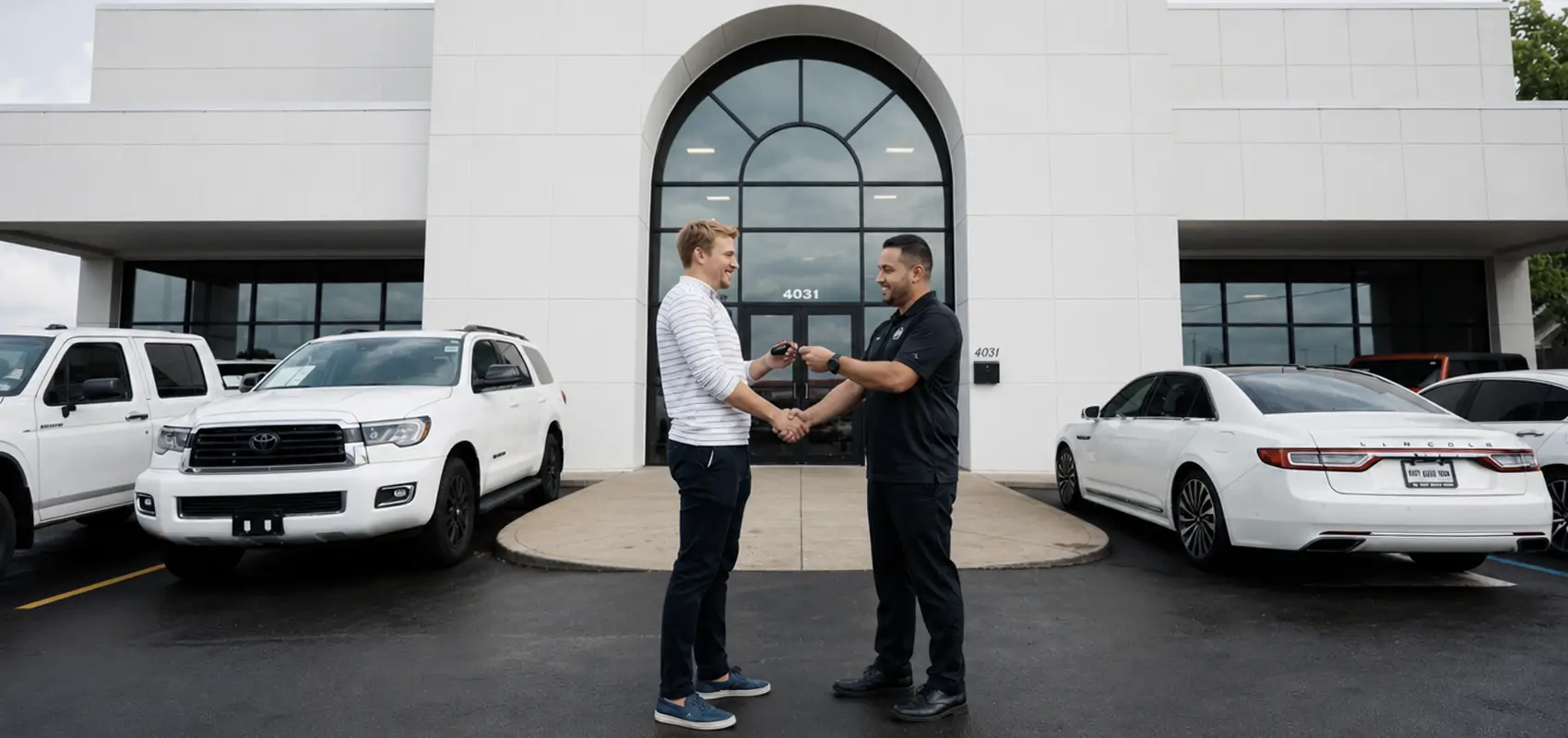
A third-party calculator estimates what a vehicle might be worth based on market data. A dealership appraisal answers a more practical question:
What is this dealership prepared to pay for this specific car?
That distinction matters. A dealer considers the vehicle’s condition, local demand, current inventory, expected reconditioning costs, and resale potential. The dealership also has to determine whether it can confidently sell the car to another customer after inspection.
For that reason, a dealer’s offer is often the most accurate car value estimate when your goal is to sell the vehicle now. It is tied to a real buyer, a real market, and a real transaction - not only to historical averages or advertised prices.
The dealership’s offer may be lower than the highest possible private-party asking price, but it can also save you from the costs and risks associated with selling privately. You do not have to find and screen buyers, arrange multiple test drives, negotiate with strangers, or handle every step of the paperwork alone.
Indy Auto Man online estimator
Indy Auto Man offers an online tool that lets Indiana vehicle owners start the valuation process at home. You can submit information about your vehicle and receive an estimated valuation range based on current market data. If you decide to continue, Indy Auto Man can provide a firm offer after reviewing the vehicle.
The online estimator is convenient when you want to:
- Find out what your car may be worth before visiting a dealership.
- Compare an estimated value with your loan payoff.
- Plan a trade-in budget.
- Decide whether selling or trading makes more sense.
- Start the process without negotiating with private buyers.
It is important to understand the difference between an online estimate and a final appraisal. The online result is preliminary. A complete dealership evaluation can account for the vehicle’s actual condition and documentation; the offer is usually valid for seven days and subject to verification of the vehicle’s condition.
Should I repair the car before selling?
Not every repair increases the offer by more than it costs. Major mechanical or structural work may be expensive and may not produce a dollar-for-dollar return.
Repairs and preparation that may help include:
- Replacing severely worn tires.
- Fixing a broken headlight or mirror.
- Removing personal items.
- Cleaning the interior and exterior.
- Gathering service records and both keys.
- Completing inexpensive safety-related repairs.
Be cautious about spending heavily on paint, engine repairs, or cosmetic upgrades unless a professional can explain how the work is likely to affect the offer.
A dealership can often evaluate the car in its current condition and make an offer based on the repairs it would complete itself.
Get a real car value estimate in Indiana
Use online research to establish a starting point, but get a dealership appraisal when you want the most accurate estimate of what your car is actually worth in a real transaction.
Ready to find out what your car is worth? Estimate your car online at Indy Auto Man or visit the dealership for the most accurate car value estimate and a firm offer.