How Much Does an EV Station Cost? A Look at Level 2 Chargers for Home and Business
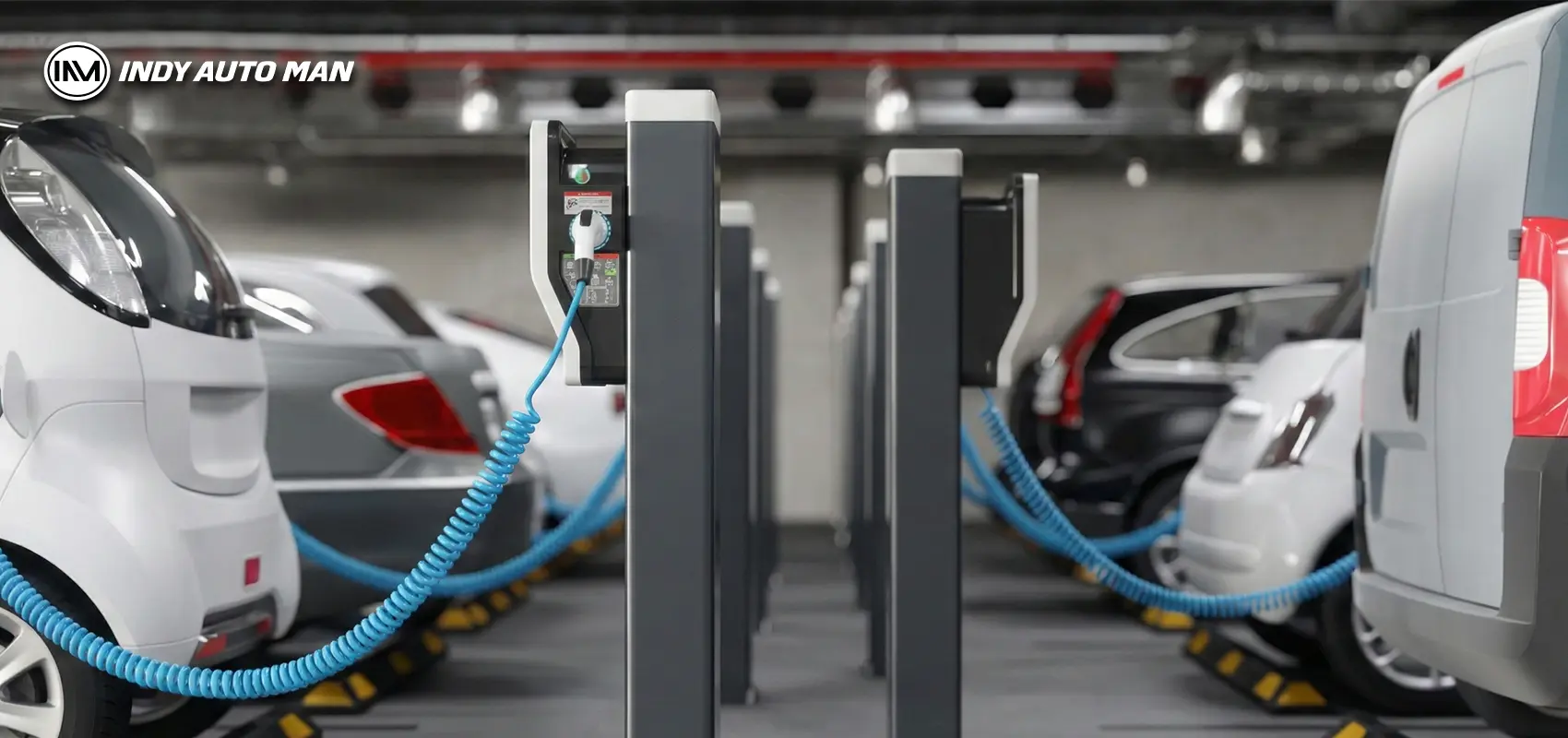
If you’re preparing to bring home your first EV, one of the main questions is: how much does an EV station cost? The answer depends on the type of charger, installation work, and whether you’re considering home use or public stations. Let's delve deeper into details with the Indy Auto Man Indianapolis dealership's technicians.
Charging Levels
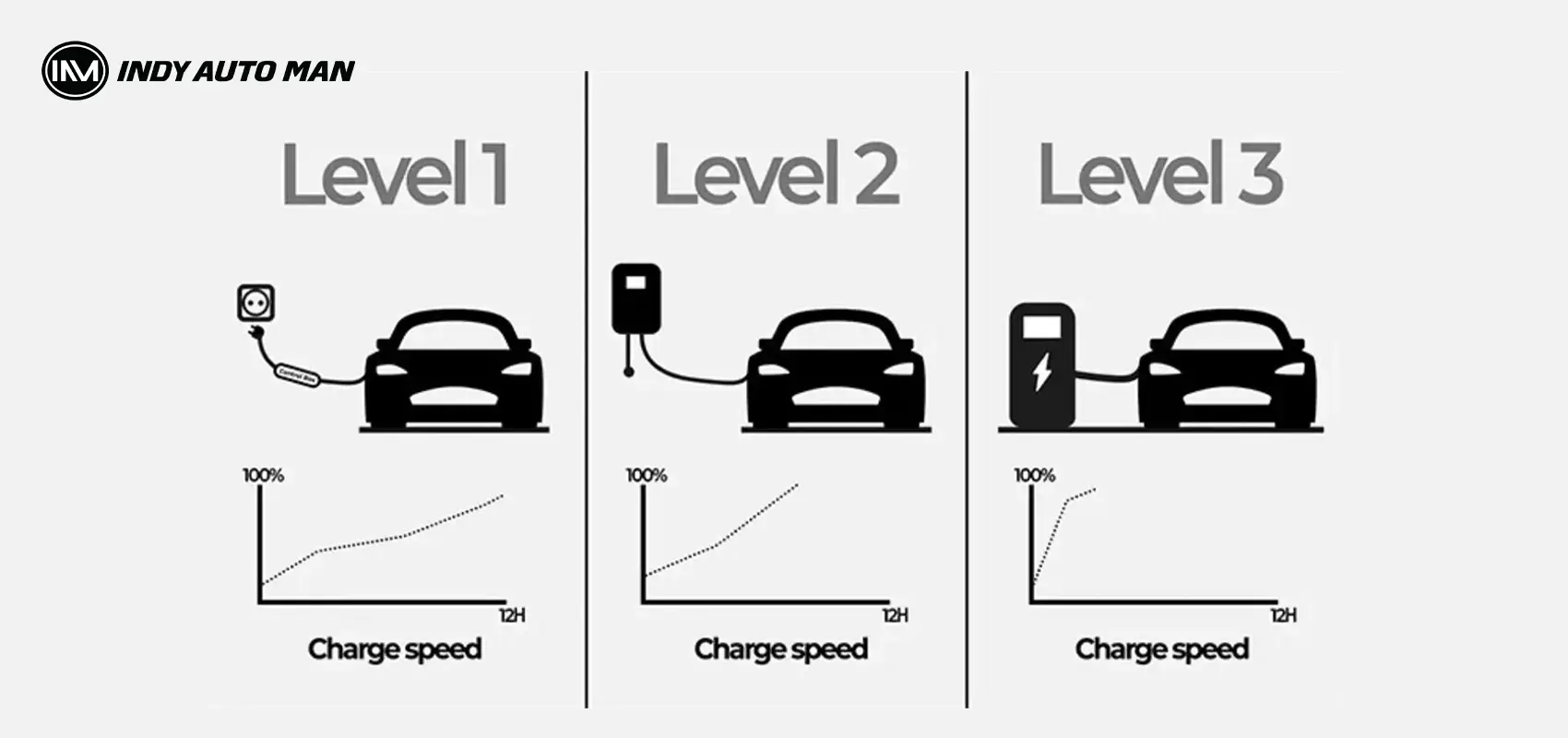
There are three EV charging levels, each with different speeds and costs:
- Level 1 charging uses a standard household 120-volt outlet. It’s the slowest option, adding about 2–5 miles of range per hour.
- Level 2 charging requires a 240-volt outlet, the same type used by large household appliances. Depending on the charger and vehicle, it can deliver 12–60 miles of range per hour.
- Level 3 charging, also called DC fast charging, is the quickest option. It can bring most EVs to 80% charge in 20–40 minutes. Installation, however, typically starts around $25,000 and can climb much higher, which is why these stations are usually set up by commercial networks rather than private owners.
For most households and small businesses, Level 2 strikes the best balance between affordability and speed.
Level 2 Charger Costs
When people ask how much an EV station costs, they’re usually asking about Level 2 chargers. Prices can vary, but here’s what to expect:
- Equipment cost: A home Level 2 charger generally ranges from $500 to $1,500. Models with Wi-Fi, scheduling, or energy-tracking features are on the higher end.
- Installation cost: If your garage already has a 240-volt outlet, the job may be as simple as $300–$600 for basic hookup. If a new outlet or panel upgrade is needed, costs can climb to $1,000–$2,500.
- Business installations: Commercial sites face higher expenses due to multiple units, larger power requirements, and compliance with building codes. Adding several Level 2 chargers often lands in the $5,000–$15,000 range before incentives.
Though the upfront costs may seem steep, many EV owners see a return through fuel savings within just a few years.
What Public EV Charging Costs Drivers
Public charging stations use different pricing models, but the most common are:
- Per kilowatt-hour (kWh): You pay for the electricity used, often between 20 and 45 cents per kWh.
- Per session: Some chargers bill a flat fee of $5–$10 per use, no matter how long you plug in.
- Per minute: Many fast chargers use this option, with rates averaging 15–40 cents per minute, encouraging drivers to unplug once they have enough charge.
Some providers also offer memberships with lower per-session fees for frequent users.
Charging Speed in Real Life
Charging speed is one of the biggest considerations. Level 1 charging can take an entire night or more to refill an EV battery, making it impractical for everyday driving. In contrast, Level 2 charging easily handles overnight needs. Even for larger vehicles, a full charge is ready by morning.
Public Level 2 stations also make sense in places where customers spend time, such as shopping centers, restaurants, or office lots. Level 3 fast charging is the go-to for road trips and highway travel, though its high cost means it’s less likely to be found at homes or small businesses.
Incentives That Reduce Costs
The price of installing a Level 2 station can turn out to be more affordable with available incentives. Federal and state programs sometimes cover part of the equipment and installation costs. In Indiana, rebates and tax credits are available, and many utility providers also offer discounts if the charger is designed with smart load management.
Federal EV tax credit explained
Why This Matters for EV Buyers
Understanding how much an EV charging costs at different stations helps you evaluate all pros and cons of purchasing the EV vs gasoline car in the long term run. A Level 2 home charger offers convenient, reliable, and affordable daily charging, while government’s support to businesses that install EV chargers in Indiana is another argument to buy electric vehicle even if you are not ready to invest in the EV station for your home yet.c
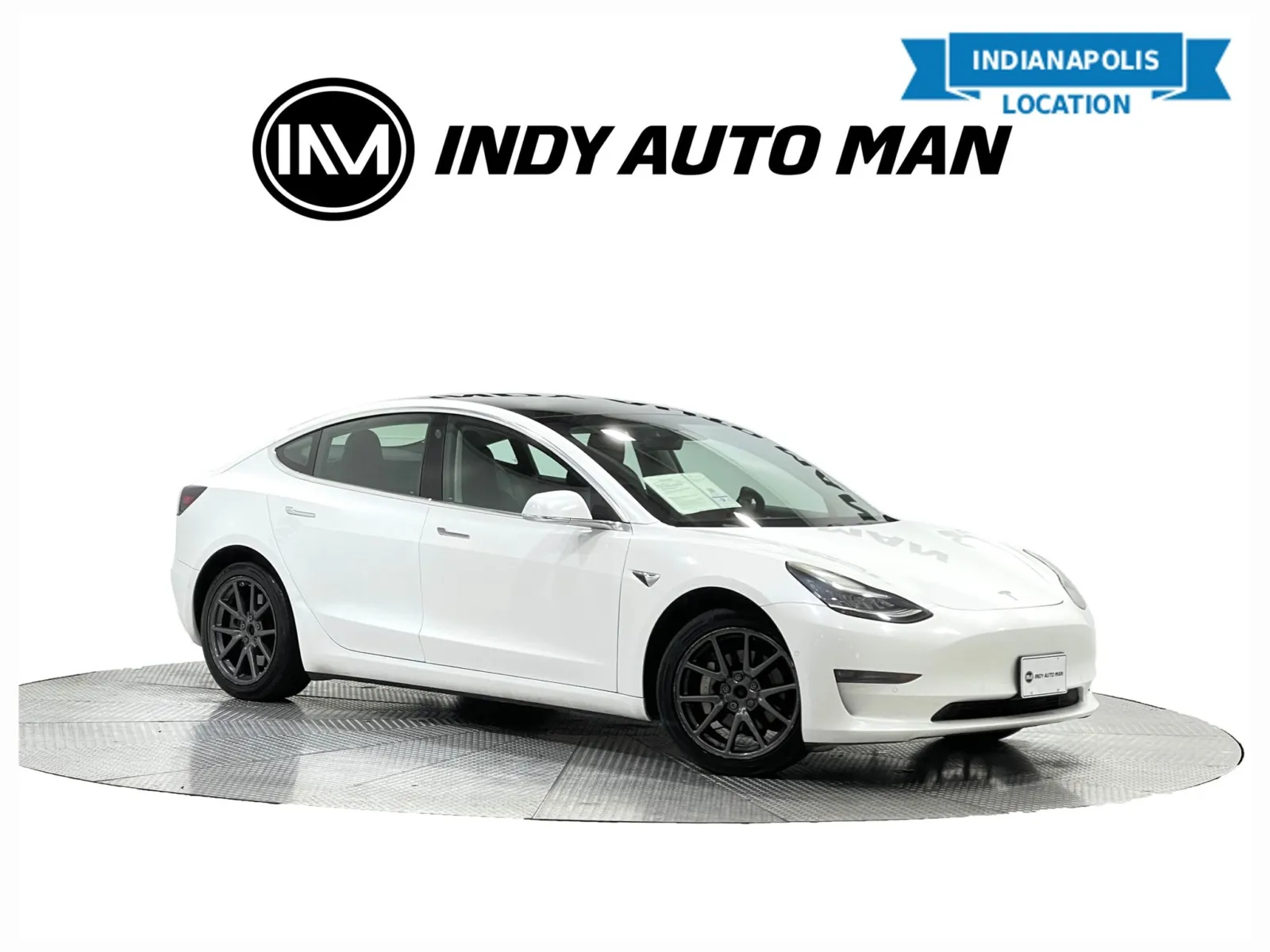
If you’re ready to make the switch, explore our range of used electric vehicles at Indy Auto Man in Indianapolis and drive into the future today.