Why Cold Weather Can Make Your Car Hard to Control
Table of Contents
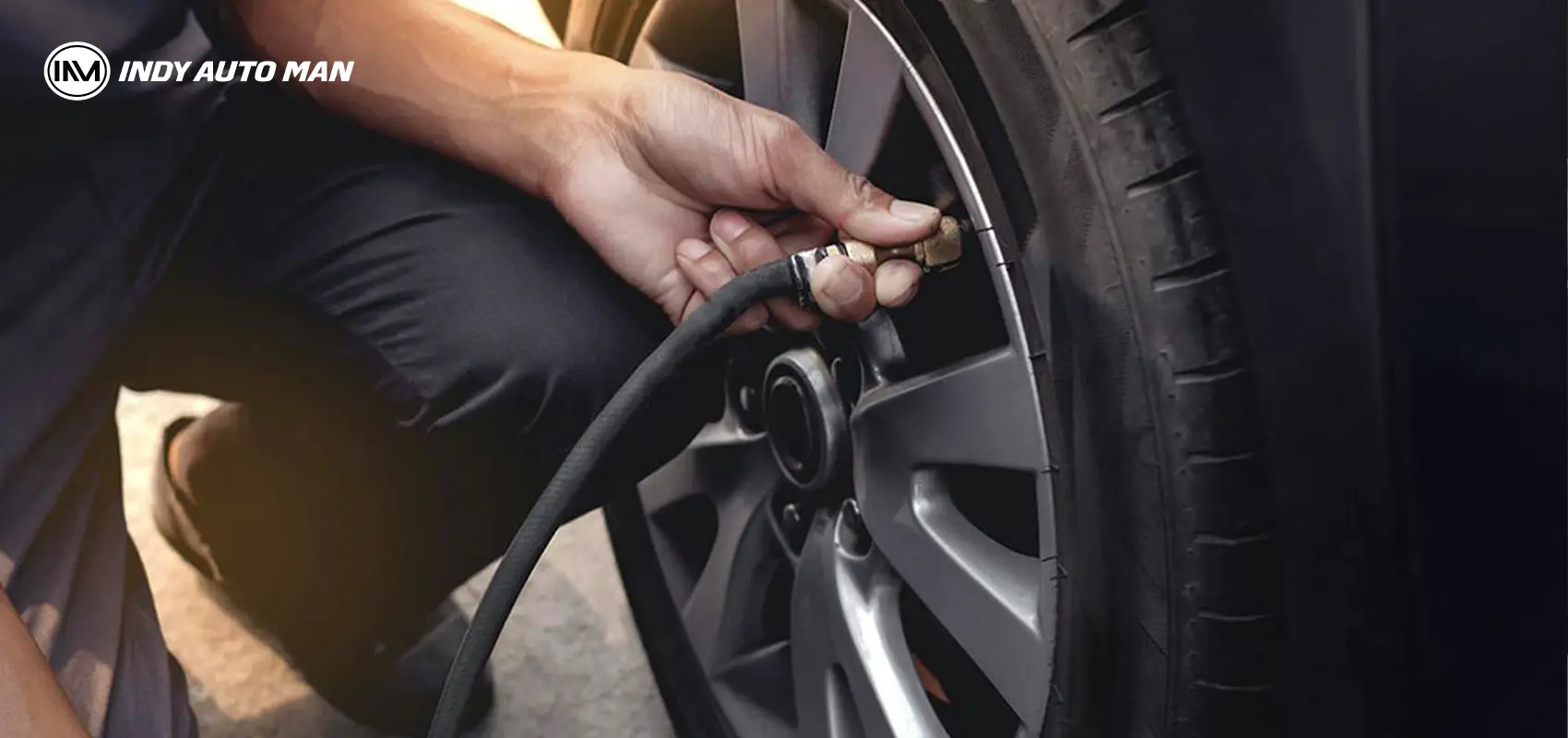
When winter ends, most drivers shift into maintenance mode - testing their batteries, changing oil, and topping off liquids. But there’s one thing even seasoned drivers often overlook: tire pressure. It’s the invisible factor that influences everything from steering precision to braking distance, tire life, and fuel efficiency.
As temperatures change, tire pressure naturally decreases. It’s not a mechanical defect or a leak - it’s simple physics. Air contracts when it gets cold, and since your tires are sealed, that contraction shows up as reduced pressure.
The Indy Auto Man car dealer’s technicians explain this process and remind that reacting on time is what separates safe driving from risky guesswork.
Why does tire pressure drop in cold weather?
Tire pressure drops in cold weather based on the behavior of gas. According to Charles’s Law, the pressure of a gas inside a fixed volume drops as the temperature decreases.
Let’s say you inflated your tires to around 32 psi at a pleasant 70°F. When the temperature plummets to 15°F, the pressure can drop to about 27 psi. If it dives even further, say to -20°F, you could be looking at 24 psi or less.
From the outside, your tires may still look fine, especially if you’re running taller, high-profile winter tires, but the tire pressure drop when cold is very real and potentially dangerous.
The hidden risks of driving on low pressure tire
Low tire pressure throws off your car’s balance and handling. The sidewalls soften under load, flexing more than they should, and that instantly makes steering response sluggish. On snow-covered or icy roads, that lack of precision magnifies - the car can start to “float,” reacting a split second later than you expect. Even a small delay in steering control can make a big difference when you’re navigating a slippery corner or avoiding a hazard.
Braking is another area that suffers. With lower pressure, the contact patch - the part of the tire that touches the road - distorts and spreads unevenly. This results in a less uniform grip and longer stopping distances, especially when traction is already compromised by ice or slush. You may press the brake pedal expecting a quick response, only to feel the tires slide before they bite.
And then there’s fuel economy. A soft tire increases rolling resistance; the engine has to work harder just to maintain the same speed. It’s not unusual to see your fuel consumption rise by several tenths of a gallon per hundred miles just from underinflation.
Over time, that adds up both at the pump and in tire wear. Underinflated tires wear unevenly, leaving distinctive patterns: feathered shoulders, waves across the tread, or small chunking along the edges.
What’s worse, when you push a low-pressure tire at highway speeds, it flexes excessively and heats up from the inside. Combine that internal friction with cold exterior air, and you get a tire that’s prime for a blowout.
How to keep tire pressure in check after winter

To drive safely in any weather, make tire pressure checks part of your dailyroutine. Cold air compresses more overnight, so the best time to test tire pressure is in the morning, before you hit the road.
If you measured 32 psi on a warm afternoon in July, aim closer to 35–36 psi in mid-January. That extra 2–3 psi compensates for cold contraction and keeps the tire operating as designed.
You should check the pressure at least every couple of weeks, and especially after big temperature swings. Don’t forget your spare - they lose air faster because of the smaller volume and exposure.
Can you rely on TPMS alone?
Many modern vehicles have tire-pressure monitoring systems (TPMS), which can help, but don’t always catch every cold weather tire pressure drop in time.
- Direct TPMS setups, with individual sensors in each wheel, are fairly accurate, but they usually don’t trigger a warning until pressure has fallen by about 6 to 7 psi.
- Indirect systems, those that rely on wheel speed sensors via the ABS, may not detect a slow, uniform loss across all four tires.
In short, trust your TPMS warnings but verify with a reliable handheld gauge.
Why do winter tires need a bit more air?
It’s also worth knowing that winter tires are softer by design. That flexibility helps them grip cold asphalt but also means they deform more easily when underinflated. Too little pressure prevents tread blocks from clearing snow effectively, reducing grip.
If you drive on studded tires, low tire pressure can reduce the studs' efficiency because they don’t press into the ice with enough force.
Avoid judging tire pressure “by eye”
One common mistake is judging pressure by sight or feel. Tires can look fully inflated even when they’re down several psi, particularly if you drive an SUV or a vehicle with thick sidewalls. The only dependable measure is your gauge.
As a rule of thumb, a 1°F change in temperature corresponds to about a 1.5 psi change in tire pressure. That’s enough to turn safe handling into a slippery experience if left unchecked.
The simple habit that improves winter safety
Weather often brings driving challenges tough enough without adding preventable issues into the mix. By keeping your tires properly inflated and accounting for temperature drops, you preserve your car’s stability, shorten braking distances, and save money on fuel and tire wear.
In the season change, proper air pressure is just as important as rubber. Make sure you have enough of both before the road ices over - schedule your visit to the Indy Auto Man service station in Indianapolis.