Vibration During Acceleration and at High Speed: How to Find the Cause

Driving vibrations are more than just a source of discomfort; they accelerate wear of joints and bearings and can loosen threaded connections. If your car shakes at speed, you should never ignore it.
We have compiled a list of the main reasons for such vibrations. However, to understand why the car is shaking, you first need to determine the circumstances under which it occurs.
Vibration while stationary
If you feel the car vibrating before you even start moving (while the engine is running), the suspension, steering, or braking systems are clearly not to blame. The cause likely lies within the engine itself.
Listen closely to how it runs. If there is a problem with a single cylinder, the engine will misfire - running unevenly - and you will both hear and feel it. If two cylinders are malfunctioning, even a novice driver would realize why the car is shuddering.
Sometimes, however, the engine runs smoothly, yet the bodywork vibrates - something easily detected by simply placing your hand on it. In this case, the culprit is likely a worn-out or broken engine mount.
After all, these components are designed to dampen the vibrations the engine naturally produces during operation.
Vibration during acceleration and at low speed
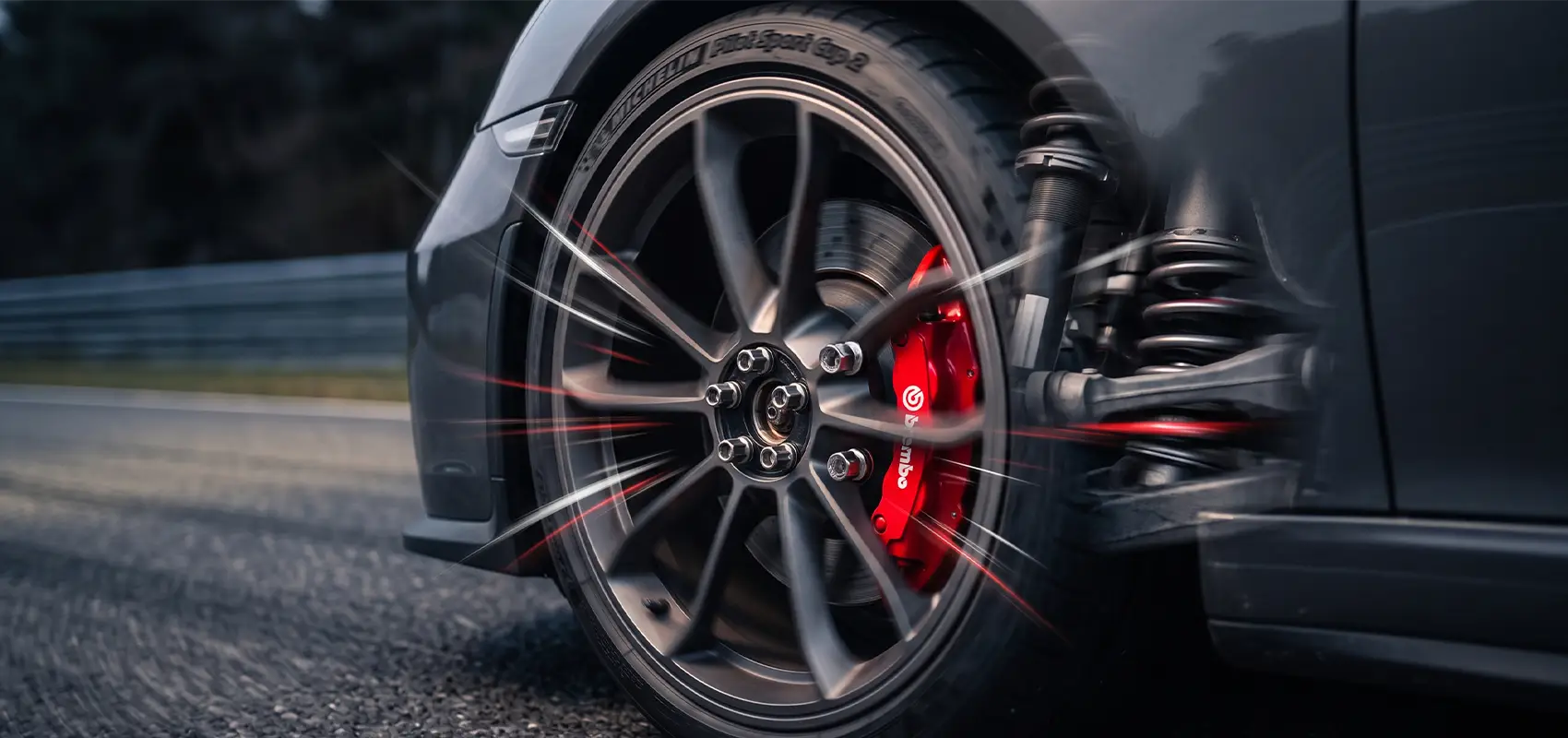
Typically, vibration is not felt at speeds below 30 mph. If it is noticeable, however, the wheels are the likely source. First, check that the wheel bolts or nuts are properly tightened, especially if the wheels were recently removed.
If a wheel is not tightened sufficiently, it wobbles from side to side, causing vibration as you pick up speed.
Another possibility is a visibly deformed wheel rim or tire. The physics behind the vibration remains the same. Stamped steel rims are the most prone to deformation, but their shape can often be corrected using specialized equipment. This is more difficult to do with alloy wheels.
Another reason a car might shake during acceleration is worn CV joints. If the joints develop play, you'll feel vibration primarily when accelerating. Turning the wheel may also produce a crunching sound - a classic sign of a faulty CV joint.
Vibrations at medium speed
Vibrations usually become noticeable at speeds above 30 mph. The most common cause is imbalance, which can occur on any wheel during tire mounting or even during normal use, and the only way to eliminate it is by using a balancing machine.
Sometimes wheels are perfectly balanced, but dirt or snow caked onto the rim shifts the center of mass, causing vibration.
In rear-wheel and all-wheel-drive vehicles, vibration can also originate in the driveshaft assembly. The most common culprits are worn universal joints (U-joints), followed by loose center support bearings; deformed driveshafts are a much rarer cause.
Checking U-joints and bearings is simple: just put the car over a service pit or on a lift and manually check for any play.
When the car shakes at high speed

Shaking above 50–60 mph is usually the least concerning. The causes may be as follows:
- Aerodynamic effects at high speed;
- Loose or poorly secured body kit components;
- Road surface conditions.
Technically, the issue persists at lower speeds, but the forces involved are too weak to be noticeable.
If the car rattles primarily on highways, a poorly secured body kit component could be the cause - especially if it is an aftermarket part. For instance, a loose rear spoiler or wing can transmit vibrations when driving at high speeds on Indiana roads.
While this isn't a critical safety hazard (certainly less dangerous than driving with a worn CV joint), it is usually much easier to fix. If you can't pinpoint the cause, ask a friend to drive alongside you and check if any external component is wobbling at speed.
Another reason for noticeable high-speed vibration might have nothing to do with the car itself: sometimes the road surface causes the vehicle to shake. This often happens on newly built or recently upgraded Indiana highways.
To verify that your car is in good working order, simply switch to a different lane or road and see if the vibration persists.
Vibration during braking
Obviously, if you feel vibration when pressing the brake pedal, the cause likely lies within the braking system - the brake discs or pads. Discs can warp due to overheating or sudden temperature changes (such as driving through a cold puddle after heavy braking). Brake pads can seize up due to corrosion on the caliper or the guide pins.
If the car shakes violently during braking and the steering wheel vibrates side to side, check the condition of the front discs and pads. If the vibration isn't transmitted to the steering wheel but can be felt through the body, the issue might lie in the components of the rear brake mechanisms themselves.
Car shakes: Schedule maintenance in Indiana at Indy Auto Man
Vibrations during acceleration, at speed, or while braking are early warnings of wear in critical components such as engine mounts, wheels, tires, CV joints, driveshafts, and brakes. Left unchecked, they accelerate damage to joints and bearings and can loosen threaded connections, turning a minor nuisance into a costly vehicle repair.
Use the symptoms above to narrow down the likely cause, but don’t wait for the problem to worsen - schedule a diagnostic and maintenance appointment with Indy Auto Man at Westfield or Indianapolis service center today to pinpoint the cause and get it fixed safely.