Sway Bar Links: How to Tell When They Need Replacement
Sway bar links are among the suspension components most prone to wear. A knocking or rattling sound in your vehicle when driving over minor bumps is one of the most common symptoms. Here is how to check the links, how long they may last, and why you should not put off replacing the sway bar links.
These are among the least expensive suspension parts, but ignoring the problem for too long can lead to additional issues developing.
What are sway bar links?
A sway bar link, also called a stabilizer-bar link or end link, is a short metal rod with a ball joint or bushing at each end. Its job is to connect the sway bar - a transverse bar running under the vehicle - to the shock absorber, strut, or suspension control arm.
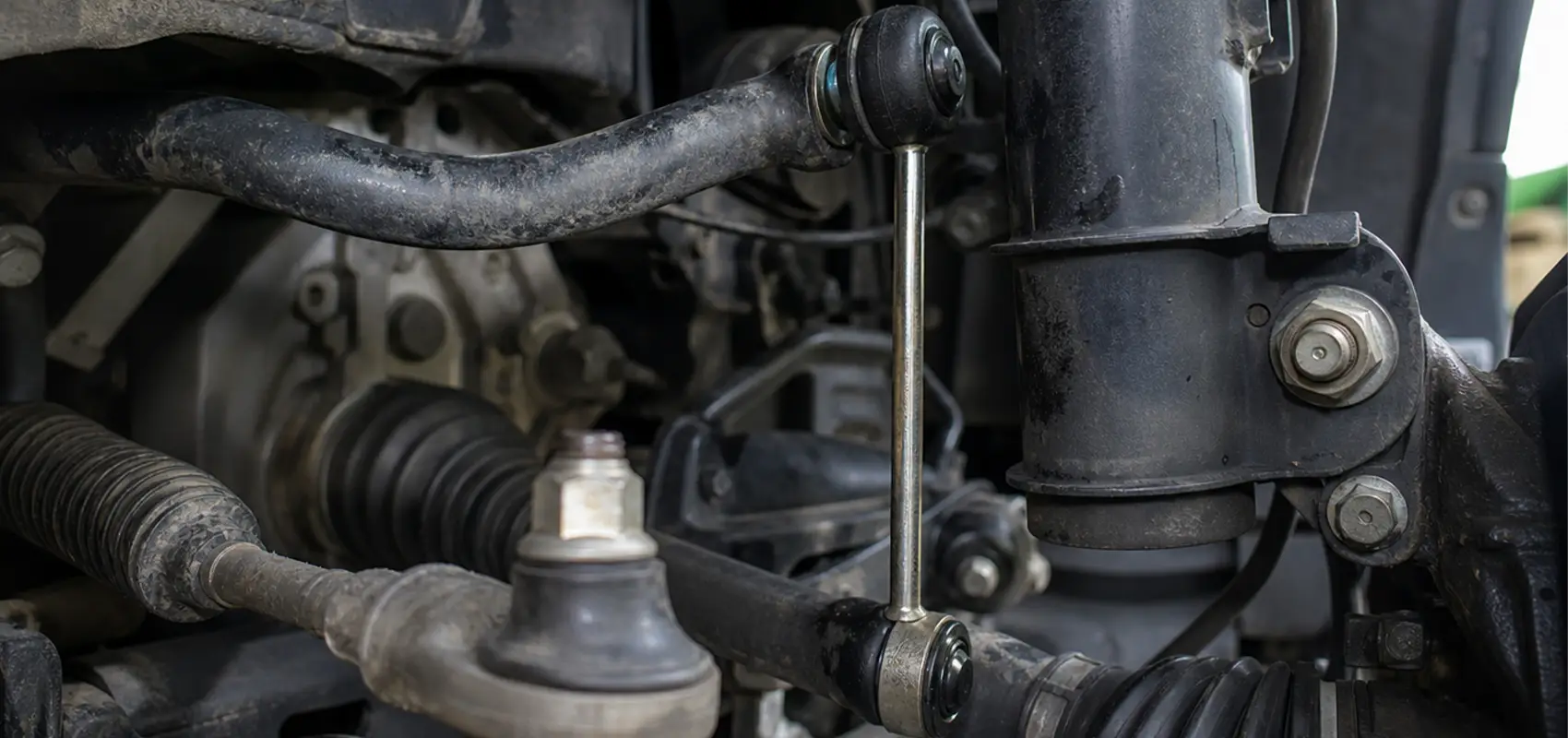
Most vehicles have one link on the left and one on the right side of the front suspension. Some auto models also have a rear sway bar, meaning the vehicle may have four links in total.
When a vehicle enters a turn, its body naturally leans toward the outside of the curve. The sway bar counteracts this movement to help keep the vehicle more level, while the links allow the bar to work with the suspension. If a link is worn or broken, the sway bar cannot function as intended.
It is also important to clear up a common misconception: sway bar links are not the same as tie rods or tie-rod ends. Tie rods transmit steering input to the wheels and directly affect steering control. Sway bar links are separate suspension components. Although both can produce knocking sounds when worn, they are located in different areas and perform different jobs.
Symptoms of worn sway bar links
The most common symptom is a distinctive metallic knocking, clunking, or rattling sound when driving slowly, particularly at speeds between approximately 3 and 20 mph. The noise usually occurs when driving over minor bumps, curbs, manhole covers, potholes, or damaged sections of pavement. On smooth asphalt, the sound may disappear completely, leading some drivers to assume the problem is minor.
Here is what to look for:
- A metallic rattling or clanking sound over minor bumps, especially at low speeds.
- A sound that appears to come from the front left or right side rather than the center of the vehicle.
- Knocking that becomes more noticeable on rough roads but disappears at highway speeds.
- A slight sense of instability when cornering at higher speeds.
- More noticeable noise when the vehicle is carrying passengers or cargo.
Indiana’s potholes, rough pavement, winter road damage, and frequent freeze-thaw cycles can place additional stress on suspension components. INDOT specifically recognizes pothole strikes as a potential source of vehicle damage.
The knocking often starts quietly and gradually becomes louder over several weeks or months. Drivers may get used to the sound until a passenger notices it.
If these symptoms sound familiar but you are unsure where the noise is coming from, remember that worn shock absorbers, strut mounts, springs, control-arm bushings, ball joints, tie rods, brake hardware, and sway bar bushings can produce similar noises. A proper inspection at a service station is the best way to identify the source.
How to check sway bar links
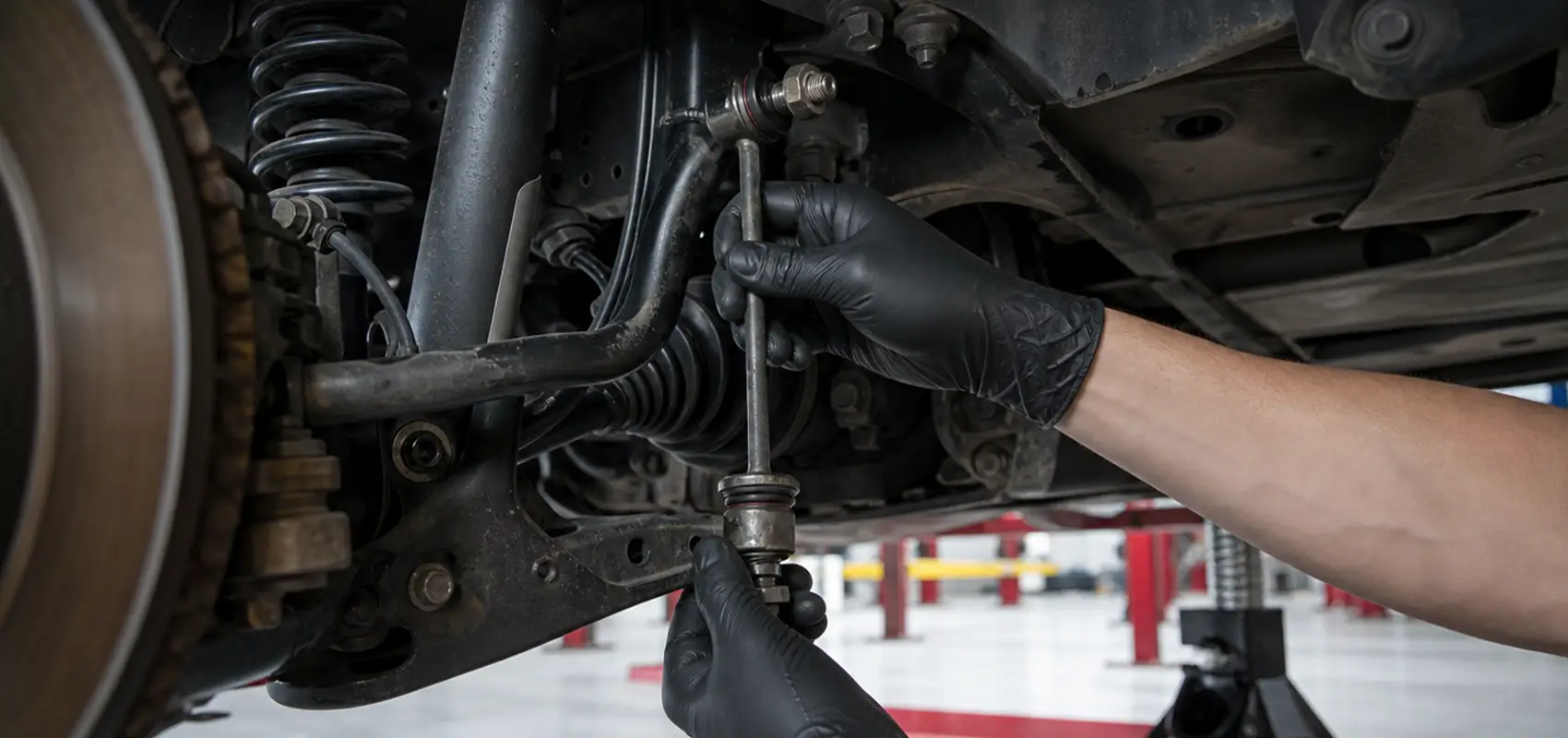
Checking the links requires no special tools, but the vehicle must be raised and properly supported. A vehicle lift is ideal. If you use a floor jack, always support the vehicle with jack stands on a solid, level surface; never work under a vehicle supported only by a jack.
- Locate the sway bar link behind the wheel and grasp its middle section.
- Try to move it up and down and from side to side.
- Feel for excessive play or looseness, and listen for a clicking or knocking sound.
- Inspect the rubber dust boots. Cracks, tears, or missing boots can allow dirt and moisture to enter the joint.
- Look for visible corrosion, a bent rod, damaged bushings, or grease leaking from a ball joint.
- Compare the left and right links. If one is noticeably looser, both may be nearing the end of their service life.
A worn link may not always be easy to diagnose by hand, and some designs require the suspension to be loaded or unloaded in a specific way during testing. If you are uncertain, have a qualified technician inspect it. A professional inspection can also rule out a worn sway bar bushing or another suspension component.
At Indy Auto Man, we recommend checking suspension components whenever a vehicle is on a lift. Sway bar links are a common source of front-end knocking, and drivers often postpone the repair because the vehicle still feels mostly normal.
Service life and replacement
There is no universal replacement interval for sway bar links. Their service life depends on the vehicle, road conditions, driving style, suspension design, and part quality. On many vehicles, links may last roughly 25,000 to 50,000 miles, while others can last considerably longer.
Indiana driving conditions can be especially demanding. Potholes, uneven pavement, road salt, moisture, and winter temperature changes can accelerate wear and corrosion. SUVs and wagons may also place more load on their suspension components than lightweight sedans.
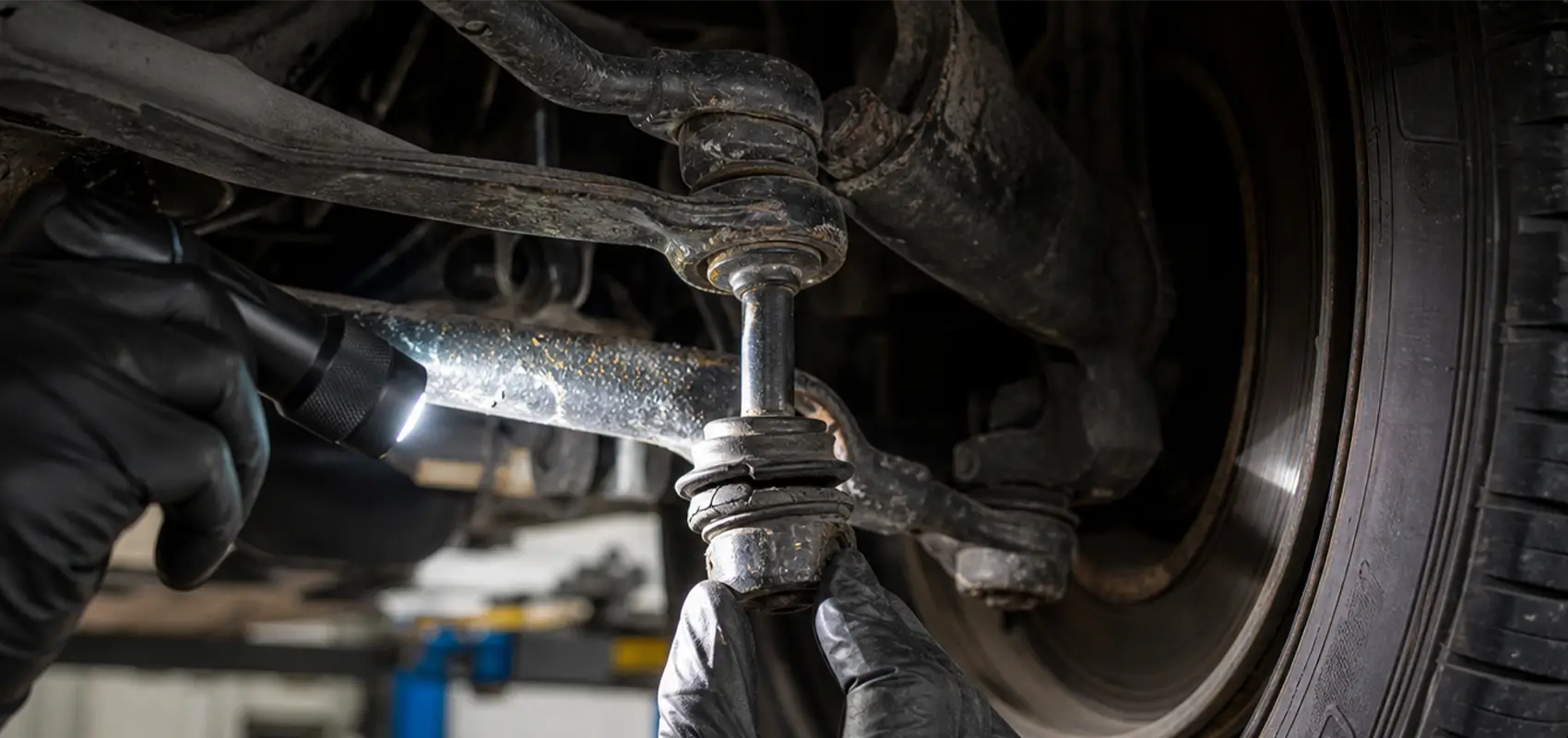
Factors that affect service life include:
- The quality and design of the replacement links.
- The condition of the roads you drive on most often.
- Driving speed over potholes, railroad crossings, and speed bumps.
- Vehicle weight and suspension geometry.
- Exposure to road salt and moisture.
Sway bar links are commonly replaced in pairs on the same axle - both front links or both rear links. Even if only one is making noise, the other may have experienced similar wear. Always follow the vehicle manufacturer’s service recommendations and have the fasteners tightened to the correct torque specification.
Replacement time varies by vehicle and by the condition of the hardware. On an easily accessible application, the repair may take about 20 to 30 minutes per side. Rusted or seized fasteners can make the job take longer.
The cost depends on the vehicle model, labor rates, and the quality of the replacement parts. Contact Indy Auto Man for a suspension inspection and in-time repair
Grab car maintenance checklist
OEM vs. aftermarket links
Aftermarket sway bar links vary significantly in quality. The least expensive parts may use thinner rods, weaker ball joints, or dust boots that do not seal properly. A low purchase price is not always a good value if the part fails prematurely.
Well-established suppliers may offer durable alternatives to original-equipment parts, but the correct choice depends on the specific vehicle and application. When selecting replacement links, consider:
- The thickness and construction of the link rod.
- The quality and fit of the rubber dust boots.
- The manufacturer’s reputation and warranty.
- Whether the part matches the vehicle’s original design.
- The installer’s ability to torque the fasteners correctly.
A quality part may cost more upfront, but it can reduce the likelihood of repeated repairs and additional trips to the shop.
Why you should not delay
Many drivers live with a knocking sound for months because it seems to be only an annoyance. A worn link may no longer transfer force properly between the sway bar and suspension. This can reduce the bar’s ability to limit body roll and may place additional stress on sway bar bushings and nearby suspension components.
A worn sway bar link does not automatically mean the vehicle is unsafe to drive, but a broken, detached, or severely loose link can affect handling. The vehicle may feel less predictable during sharp turns, sudden lane changes, or emergency maneuvers. A loose component can also contact a wheel, tire, brake hose, or sensor wire.
Stop driving and arrange an inspection if:
- The link is broken, detached, or contacting another component.
- The vehicle suddenly feels unstable.
- You notice steering play, severe pulling, or unusual wheel movement.
- The source of the noise has not been confirmed, and a ball joint, tie rod, or control arm could be loose.
If you hear a knocking sound over bumps, stop by Indy Auto Man or a qualified repair shop in Indiana for an inspection. Identifying a worn sway bar link early is usually far less expensive than waiting until related suspension components also need attention.