From Moon Missions to Main Streets: How Space Tech Shaped Modern Cars
At Indy Auto Man, we’re used to talking about horsepower, fuel economy, and smart car tech, but some of the innovations behind today’s vehicles have far more unexpected origins. Long before advanced driver-assist systems and ergonomic interiors became standard, automakers and space engineers were solving problems that would influence both industries for decades.
Some connections between rocket science and the automotive industry remain classified, and some are difficult to trace. But the ones we wish to discuss today can be divided into two groups:
- automakers' contributions to space exploration;
- technologies that migrated from aerospace to auto manufacturing.
Made on Earth, built for space
Automakers are no longer just lending a hand to space projects; they are helping define what mobility beyond Earth could look like. From lunar rovers and reusable rockets to autonomous systems and lightweight materials, these companies are turning their road-going expertise into hardware for the Moon and beyond.
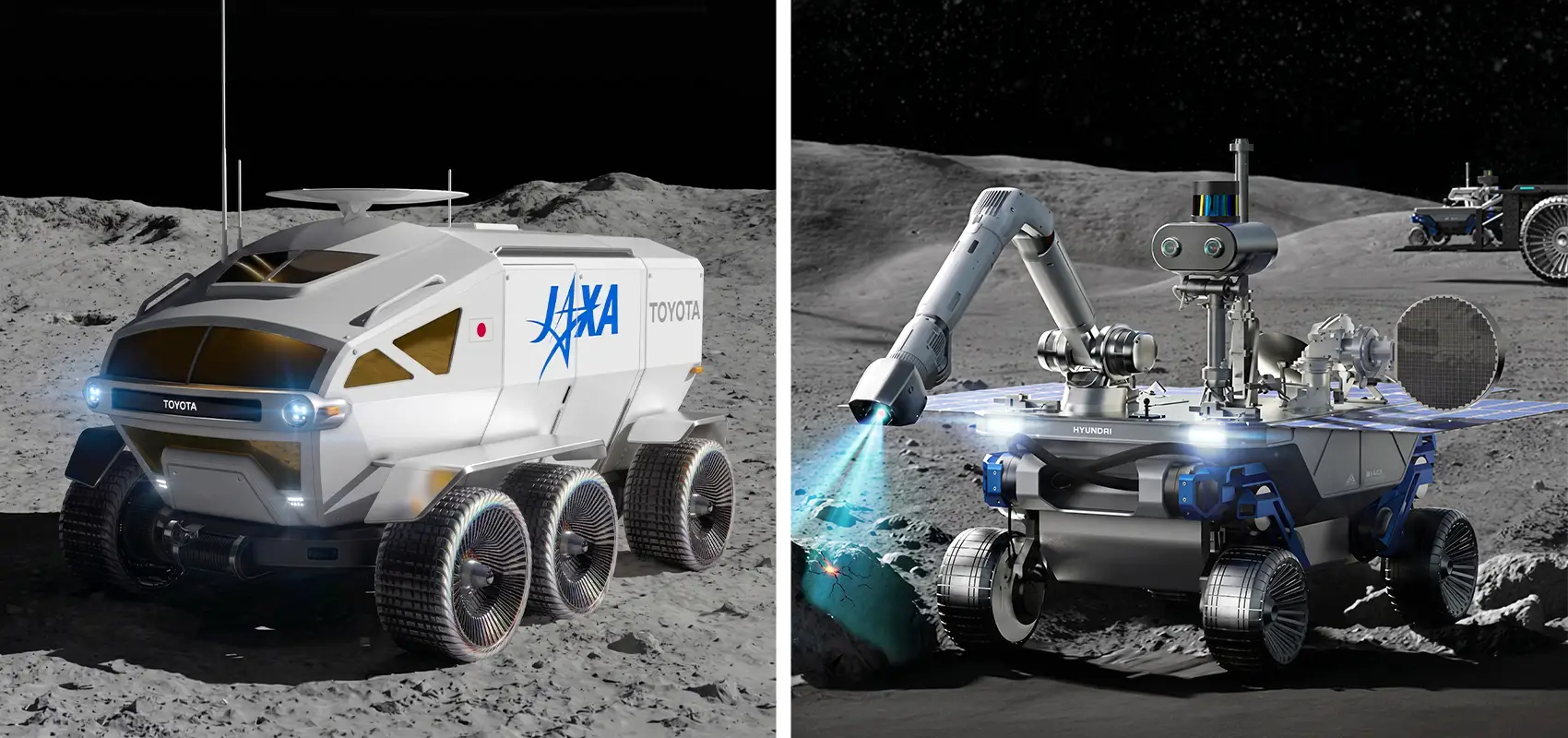
- Toyota: developing the Lunar Cruiser with JAXA for Artemis-era lunar exploration, with hydrogen fuel-cell power, autonomous capability, and long-range mobility designed for the Moon.
- Honda: working on reusable rocket technology and space systems, with a successful launch-and-landing milestone completed in 2025 and ongoing research tied to sustainable rockets and lunar support systems.
- Hyundai and Kia: developing lunar rover concepts that use robotics, autonomous driving, solar charging, and thermal protection for future Moon missions.
- Nissan: contributing autonomous-driving expertise and production know-how to lunar terrain vehicle development for future NASA missions.
- Audi: backed the lunar quattro concept for the Google Lunar X Prize, a compact rover built to explore the Moon and transmit images back to Earth.
- Lamborghini: sent composite material samples to the ISS to study how extreme space conditions affect advanced materials, helping refine lightweight performance composites.
- Tesla: became part of space history when a Roadster was launched aboard a Falcon Heavy rocket and remains in heliocentric orbit as a symbolic payload.
- Porsche: contributed design influence to a fictional spacecraft built for film, showing how automotive styling can also travel into space-inspired storytelling.
Now let's take a closer look at the pioneers who made all subsequent achievements possible.
Ford at the origins of the US space program
Few people remember now, but Ford had a division called Aerospace and Communications Corporation. In 1956, the world's oldest automaker acquired Aeronutronic, and in 1961, Philco. They became the foundation of the aerospace division and, by the mid-1960s, developed NASA's Mission Control Center. Yes, that same famous Mission Control Center, nicknamed "Houston," because it was located in that city in the state of Texas.
Essentially, this division of Ford handled all the infrastructure setup and sourced equipment externally when they couldn’t manufacture it in-house. Thus, the legendary automaker played a role in key stages of American space exploration - the Gemini and Apollo programs, culminating in the Moon landing.
The crews of Apollo 15, 16, and 17 drove a GM car on the moon
General Motors took part in developing motorized vehicles for astronauts on lunar missions. Although their initial designs were not fully realized, certain solutions proved highly beneficial. For example, GM engineer Ferenc Pavlics and his colleagues came up with unique aluminum mesh tires. These wheels were resistant to sharp rocks and also provided shock absorption.
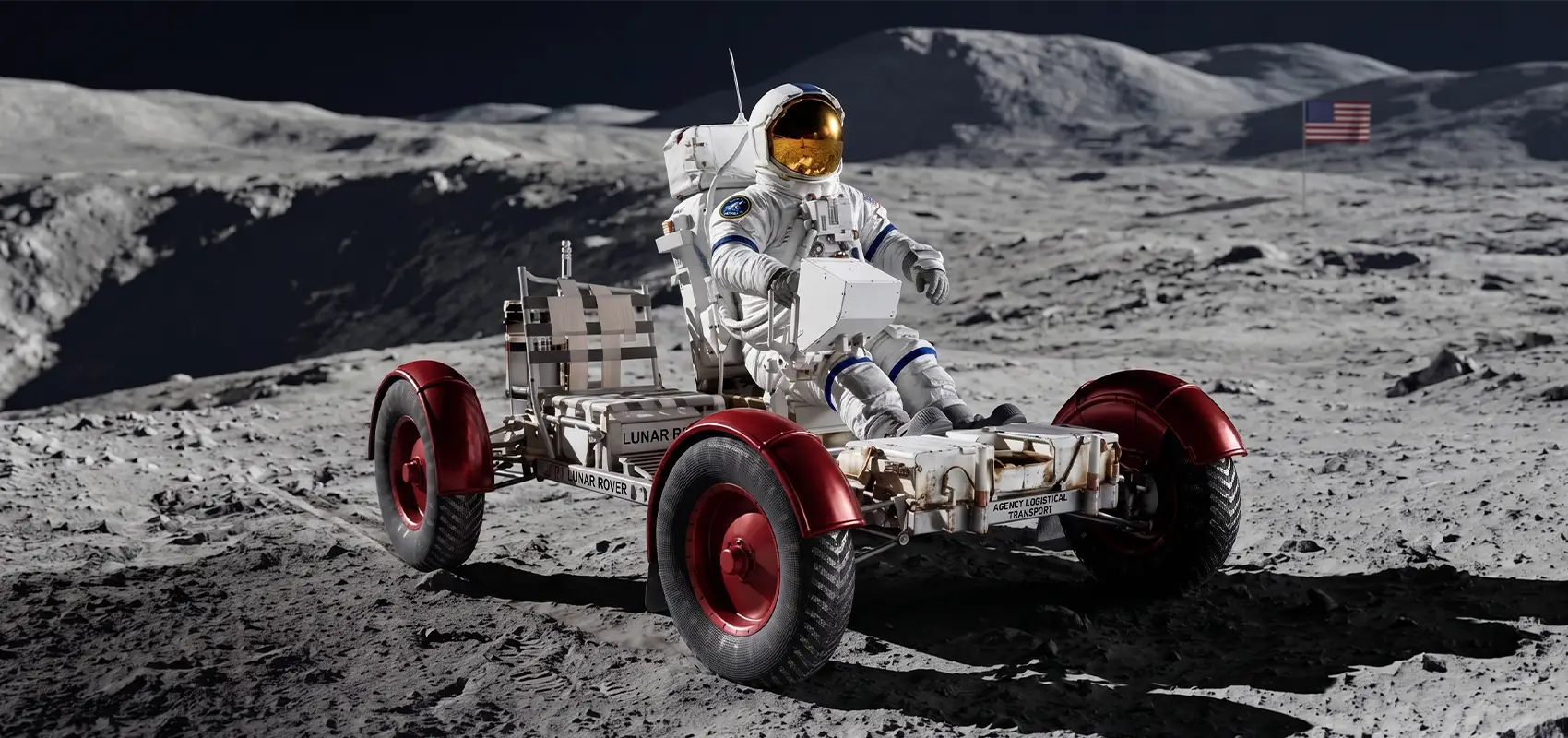
The lunar rover, folded and stored within the lander of the last three Apollo missions, was only possible thanks to improvements in the Saturn V launch vehicle's payload capacity. Although the vehicle weighed only 75 pounds on the Moon, its actual mass was 463 pounds.
The extraterrestrial electric vehicle could accelerate to 8 mph and carry two astronauts with all the necessary field equipment and collected samples (full load up to 1,080 lbs).
And if American policymakers had not cut the program’s budget in the early 1970s, and if missions had been carried out using a two-launch design, Armstrong and Aldrin might have explored the Moon in a massive GM mobile laboratory weighing nearly 6,600 pounds.
Toyota and GM Robots
After the US victory in the Moon race, space agency budgets declined. Large programs were scaled back or canceled, and fewer companies remained involved. However, GM has continued to make notable contributions to space exploration since then.
In 2016, the ISS crew tested the RoboGlove - a device that helps users perform manual tasks without fatigue. Shortly before that, GM engineers developed the remote-controlled robot Robonaut 2.
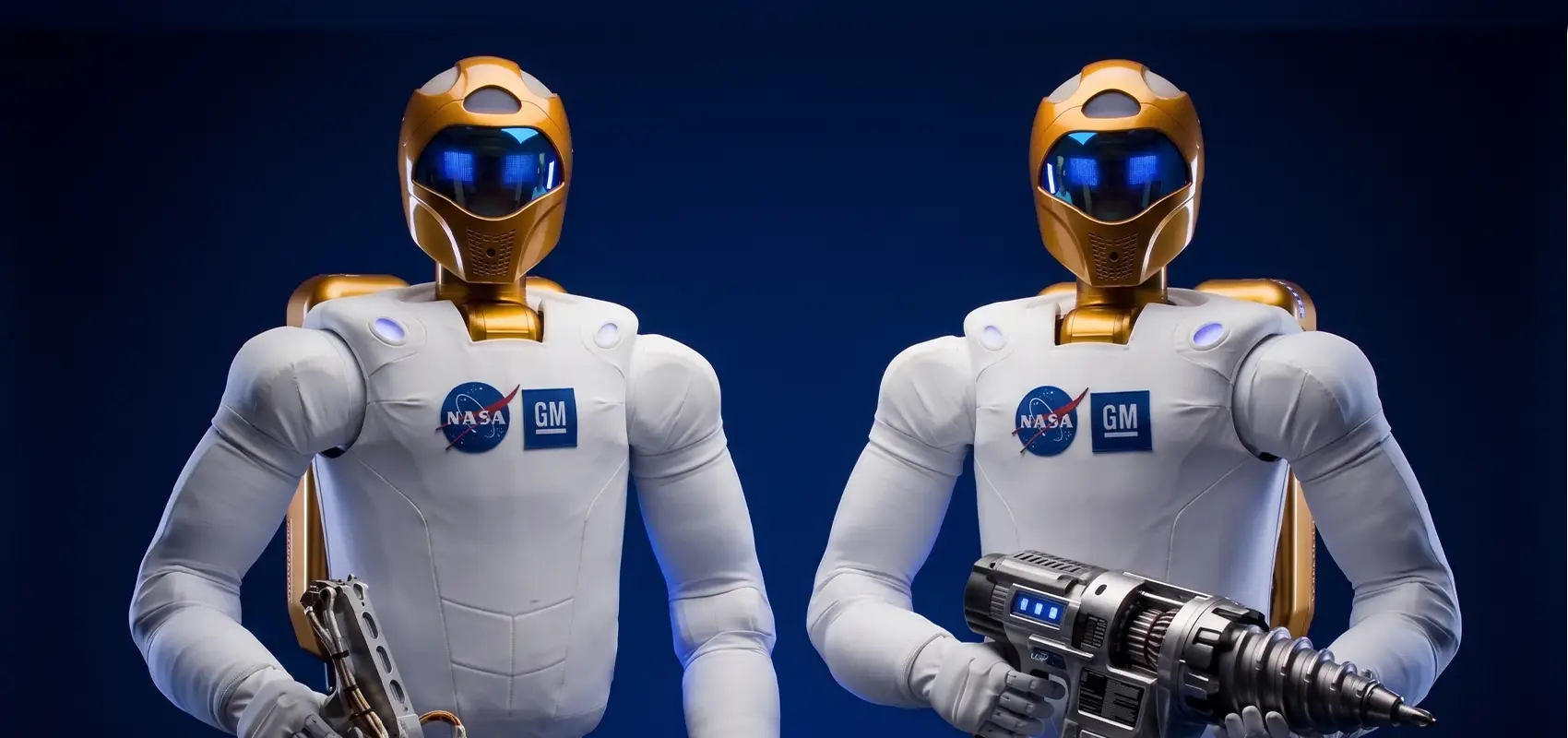
In 2011, it launched to the International Space Station aboard the shuttle Discovery (mission STS-133). Two years later, a Japanese cargo spacecraft delivered another robot, Kirobo, to the ISS.
Several Japanese companies and universities contributed to its development, including Toyota, which provided a voice recognition system for the humanoid robot.
“Space” in cars
While automakers' contributions to space exploration can be measured, the reverse influence is harder to track. However, NASA has identified several automotive technologies that it helped develop directly or indirectly.
Comfortable seats for Nissan
The Japanese automaker Nissan used NASA research to design seats with improved ergonomics. By studying astronauts’ neutral body posture in microgravity, Nissan’s engineers identified positions that reduce strain.
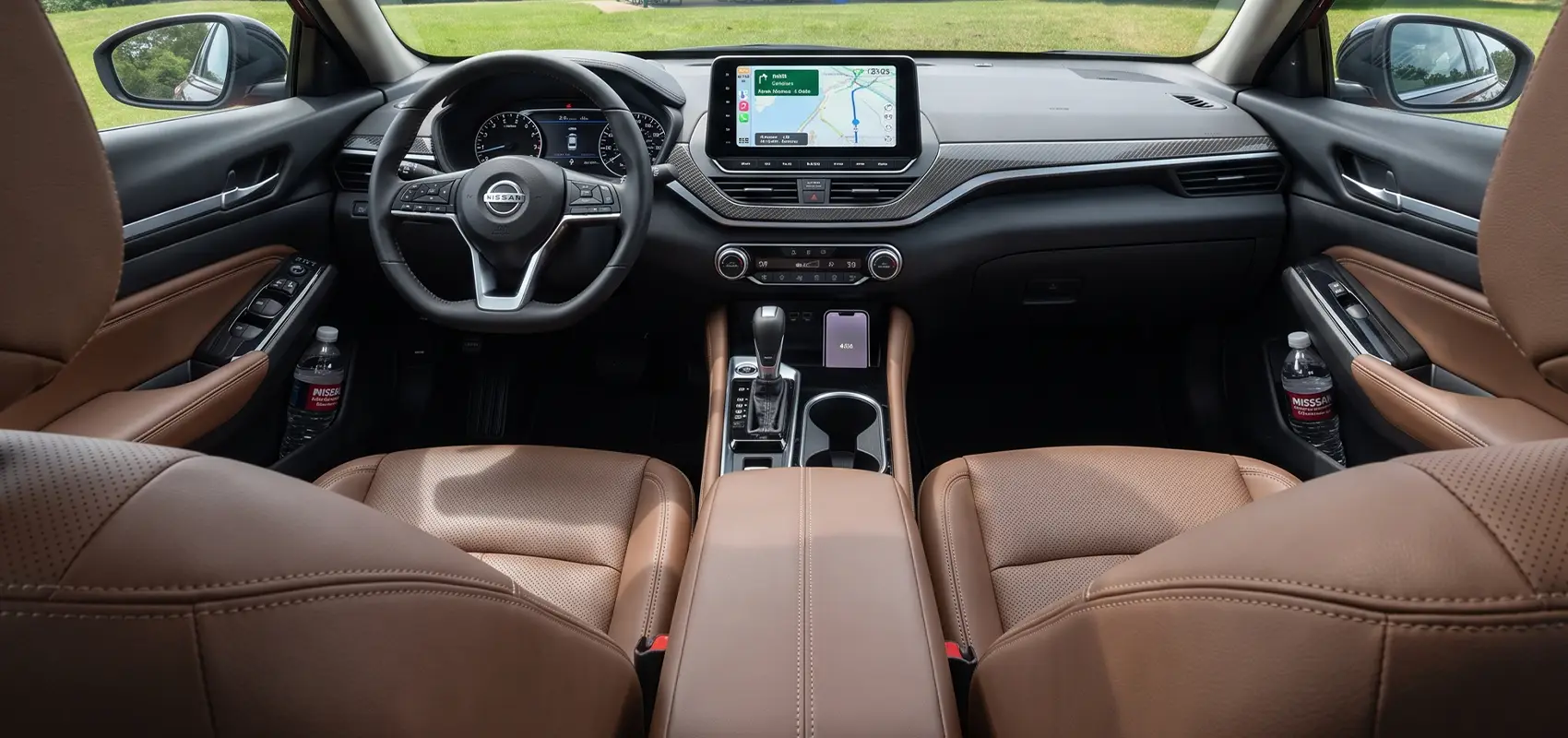
Nissan applied these findings to create more comfortable and supportive seats, first introduced in the 2013 Altima model.
Tire pressure sensors
A compact, energy-efficient sensor that converts gas pressure into an electrical signal was developed during the Space Shuttle program. Because shuttles landed at high speeds, monitoring tire pressure was critical. With minor modifications, this technology became standard in modern vehicles and was adopted by many automakers worldwide.
Engine additives
In the late 1980s, NASA launched a competition focused on long-lasting lubricants. Mars rovers cannot receive maintenance, so their components must endure extreme conditions.
One research team, led by Washington State University graduate P. Rudenko, developed a suspension of specialized nanoparticles. These particles resemble microscopic coltsfoot leaves - smooth on one side and rough on the other. When they contact a worn surface, their rough sides adhere to it, helping restore the contact area.
In 2013, Rudenko founded TriboTEX, commercializing compounds based on this technology as motor oil additives.
Thermal insulation and air filters for racers
NASA engineers conducted extensive research to protect people and equipment from extreme temperatures and maintain air quality in closed environments.
Using these developments, Boeing subsidiary BSR Products has produced specialty materials for NASCAR for decades. These include heat-insulating mats that save drivers from engine heat or fire, as well as filtration systems that remove harmful dust and gases.
Artificial Intelligence and hardware for autonomous vehicles
Doppler lidars, computer vision systems, and AI for obstacle detection were originally developed at NASA for robotic planetary exploration.
These technologies did not transfer directly to self-driving cars, but they influenced solutions later adopted by companies such as Tesla, Waymo, Uber, and Aurora.
Remarkably, real Mars rovers use only a fraction of these advancements. For example, Curiosity and Perseverance navigate using a limited number of cameras, and obstacle detection relies on relatively simple algorithms rather than neural networks.
This is just a small part of the complex and fascinating relationship between two seemingly distant fields. Technology moves between industries - and even between planets - often in unexpected ways. What begins as an expensive space innovation can eventually make everyday driving safer, more comfortable, and more efficient.
From lunar rovers to smart seats and safety systems, space innovation has already found its way into everyday driving - and at Indy Auto Man, that technology shows up in comfortable, reliable, and safe cars built for real life. Test drive one today and feel the space-age engineering in your own ride.